



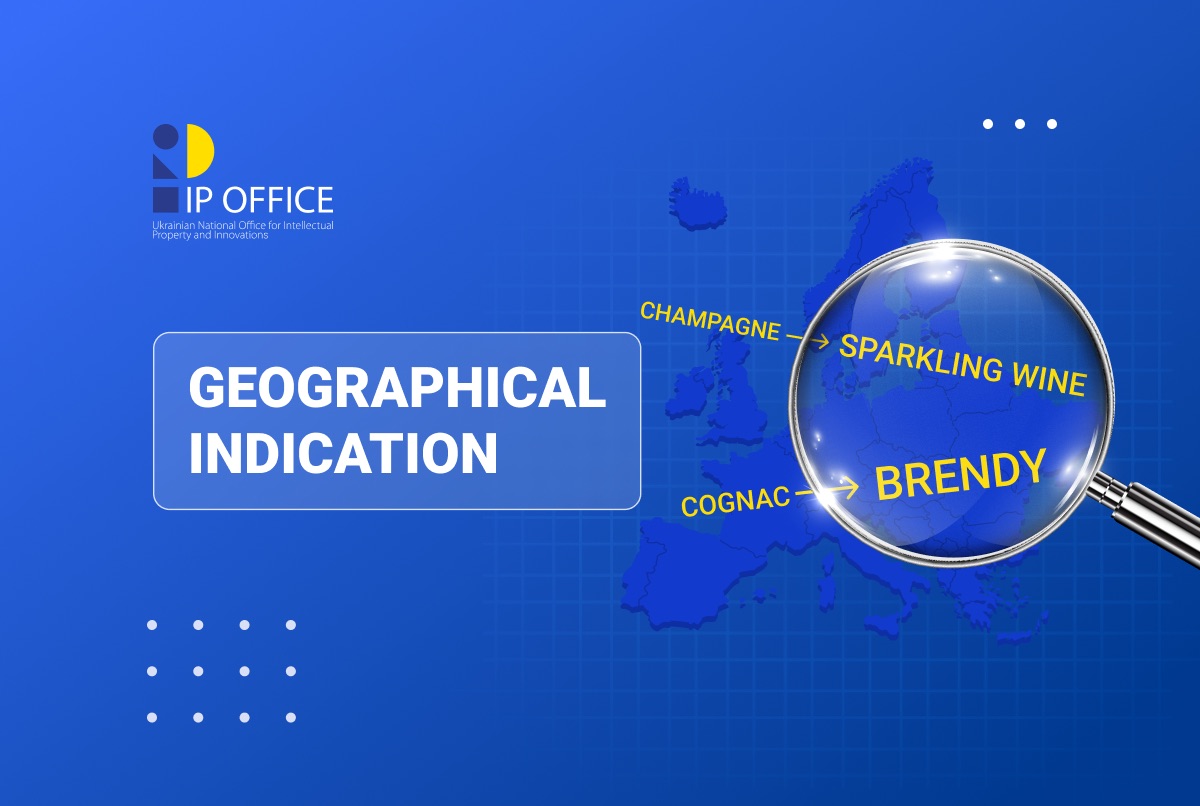
On January 1, 2026, the 10-year transition period provided by the Association Agreement between Ukraine and the European Union will end, and Ukraine will discontinue the use of certain EU geographical indications for the designation of similar alcoholic beverages of Ukrainian origin.
This concerns geographical indications for EU wines:
and EU spirit drinks:
The names of Ukrainian wines and spirit drinks must be changed to those provided for by the laws of Ukraine “On Geographical Indications of Spirit Drinks” and “On Grapes and Wine.” For example, “champagne” produced in Ukraine should be designated as “sparkling wine,” and “cognac” should be called “brandy.” Since they have no connection to the French regions of Champagne and Cognac.
The Association Agreement establishes standards for the legal protection of geographical indications and defines the obligations of the Parties regarding their mutual protection (Section 3 “Geographical Indications” of Chapter 9 “Intellectual Property” of Title IV “Trade and Trade-Related Matters”). In accordance with Article 202(3) of the Agreement, Ukraine has undertaken to ensure the protection of geographical indications for EU agricultural and food products, as well as for EU wines, aromatized wines, and spirits listed in Annex XXII-C and Annex XXII-D to the Agreement.
For a number of designations that coincide with EU geographical indications but were used to designate goods originating in Ukraine, the Agreement provided for a transitional period of 10 years. It was calculated from January 1, 2016, the date of provisional application of Title IV of the Agreement. During the 10-year transition period, the use of EU geographical indications to designate and present certain comparable products originating in Ukraine continued.
Therefore, from January 1, 2026, Ukraine must stop using these EU geographical indications to designate comparable products originating in Ukraine.
At the same time, in order to ensure the implementation of the Association Agreement in terms of legal protection of geographical indications of spirits, wines, wine-based aromatized products, and the implementation of relevant EU Regulations into national legislation, the following laws of Ukraine were adopted:
(No. 2800-IX of December 1, 2022, entered into force on December 29, 2024);
(No. 3928-IX of August 22, 2024, entered into force on January 1, 2026).
These laws establish Ukraine’s obligation to discontinue the use of geographical indications for EU spirit drinks Cognac, Armagnac, Calvados, Grappa, Anis Português and geographical indications of wines Champagne, Madeira, Porto, Jerez/Xérès/Sherry, Marsala, Malaga, Tokaj.
This does not apply to spirit drinks produced and labeled in accordance with the legislation in force prior to January 1, 2026, which may be implemented in Ukraine until existing stocks run out. The official names of such spirit drinks originating in Ukraine must be brought into line with the requirements of Law No. 2800-IX.
The use of designations derived from the geographical indications of EU spirits listed above for spirit drinks, spirit distillates, and technologies used in the production of spirit drinks will be prohibited from January 1, 2026.
The official names of wines that use registered EU geographical indications must be changed and brought into line with the requirements of Law No. 3928-IX.
The use of words derived from registered GI of EU wines (“champanization,” “Tokay,” etc.) is prohibited.
These changes are an important step towards harmonizing Ukrainian legislation with European Union law and strengthening the system for protecting geographical indications.
“The end of the transition period and the refusal to use certain geographical indications of wines and spirits of the European Union for Ukrainian products should be seen as another stimulus for Ukraine’s development. This will help establish the unique identity of Ukrainian products, increase their value and trust in them both in the European Union and globally. The protection of geographical indications is an important component of intellectual property culture and strategic business development,” emphasized Olena Orliuk.
Read also:
Geography of Independence: Where Ukrainian Geographical Indications Come From

No Comments