



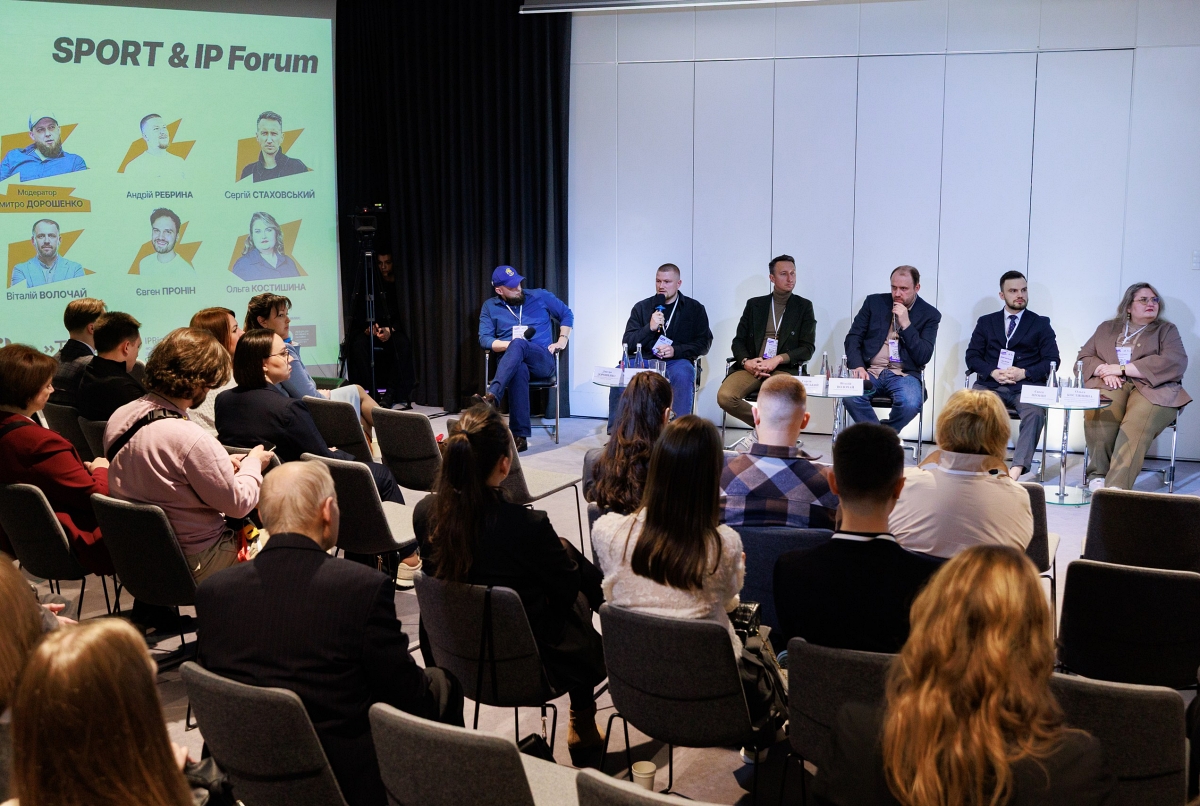
The forum included a discussion on how intellectual property generates revenue in sports – from media rights and brands to contracts and athletes’ rights.
The SPORT & IP Forum took place in Kyiv as part of IP WEEK 2026. It is organized by the Ukrainian National Office for Intellectual Property and Innovations (UANIPIO/IP Office) under the auspices of the Ministry of Economy, Environment and Agriculture of Ukraine (Ministry of Economy) with the support of the Ukrainian Bar Association (UBA).
You can watch the SPORT & IP Forum broadcast on the IP Office’s YouTube channel:
The first session of the event – “Sports as a Business: commercialization of intellectual property” – covered the following key issues:
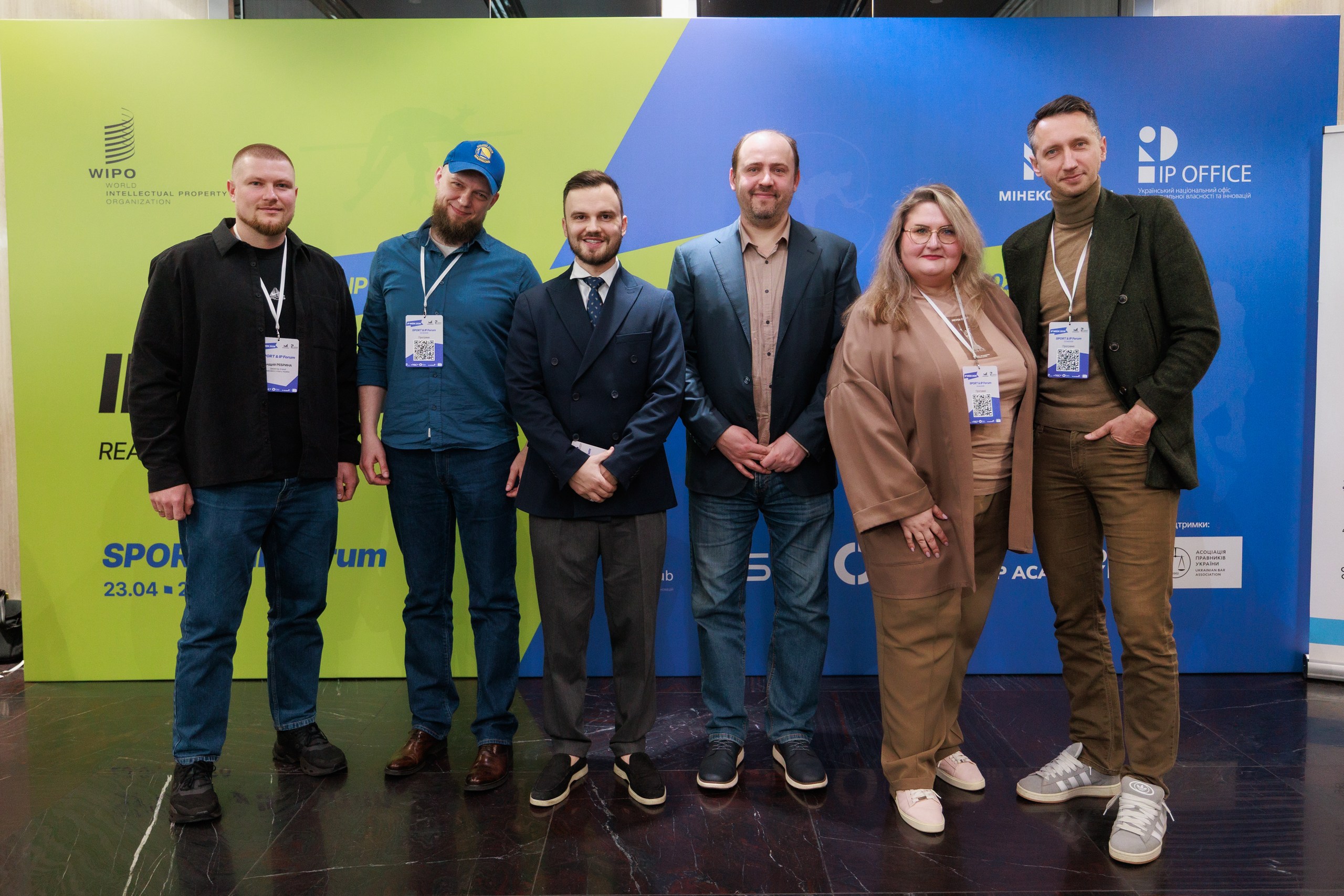
Session participants (from left to right): Andrii Rebryna, Dmytro Doroshenko, Yevhen Pronin, Vitalii Volochai, Olga Kostyshyna and Serhii Stakhovsky
The discussion was moderated by Dmytro Doroshenko, Head of the Unit for the Development of Creative Sectors of the Economy at UANIPIO, who emphasized that in modern sports, the main sources of revenue are increasingly linked to IP:
“In the global sports industry, hundreds of billions of dollars are generated each year not so much by ticket sales for events as by intellectual property assets – merchandise, trademarks and media rights. The pandemic has clearly shown that tickets are no longer a reliable source of revenue. Instead, media rights, trademarks and advertising have become the stable foundation of the sports business. Unfortunately, there is still a lack of full understanding of this potential in Ukraine, but it is precisely such discussions that should help change the approach.”
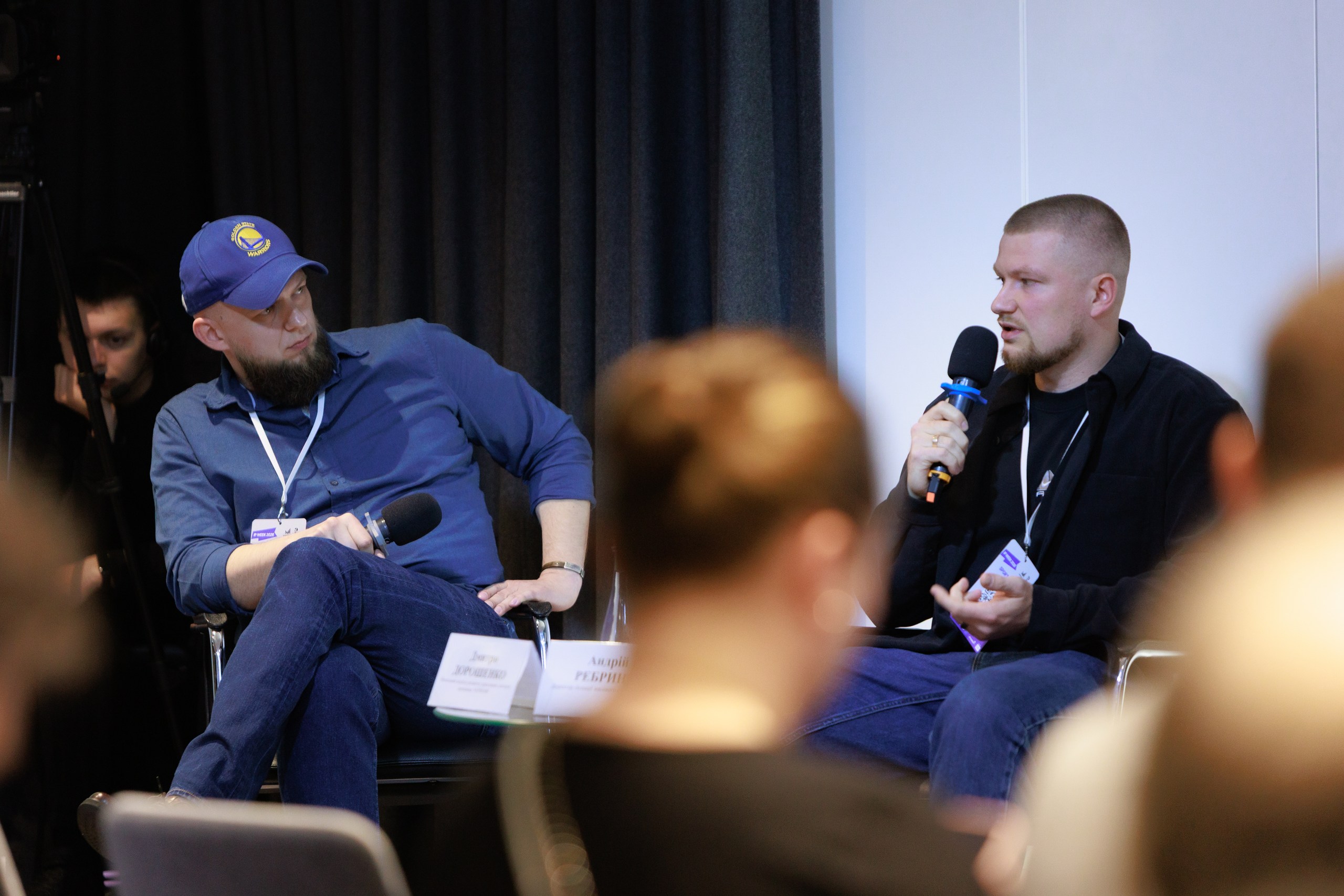
Dmytro Doroshenko (left) and Andrii Rebryna
Among the session participants was Andrii Rebryna, Director of the State Institution “Agency for Mass Sport of Ukraine”, who shared his vision on how a sports initiative is turned into a product and why brand recognition is key to scaling up:
“Every project, if it reaches the level of a product, must be recognizable – not only by its name, but also by its design, visual communication and presence in the public sphere. At the Agency for Mass Sport of Ukraine, we start by testing an idea in a small setting and when we see that it works, we turn it into a product and scale it nationally.
This is exactly what is happening with the “Plich-o-Plich” project. Already today, we see that the project’s recognition is encouraging schools to create clubs and teams and sports federations to join it. If a project becomes popular, it begins to function not only as a social initiative but also as a foundation for future commercialization – through media rights, merchandise and sponsorship.
We recognize that such products must be properly structured and legally established. What is created within a government institution must be formalized as a state asset. And what emerges in the civil society sector must belong to the organizations that create it. This is crucial for the development and preservation of the value of such projects in the future.”
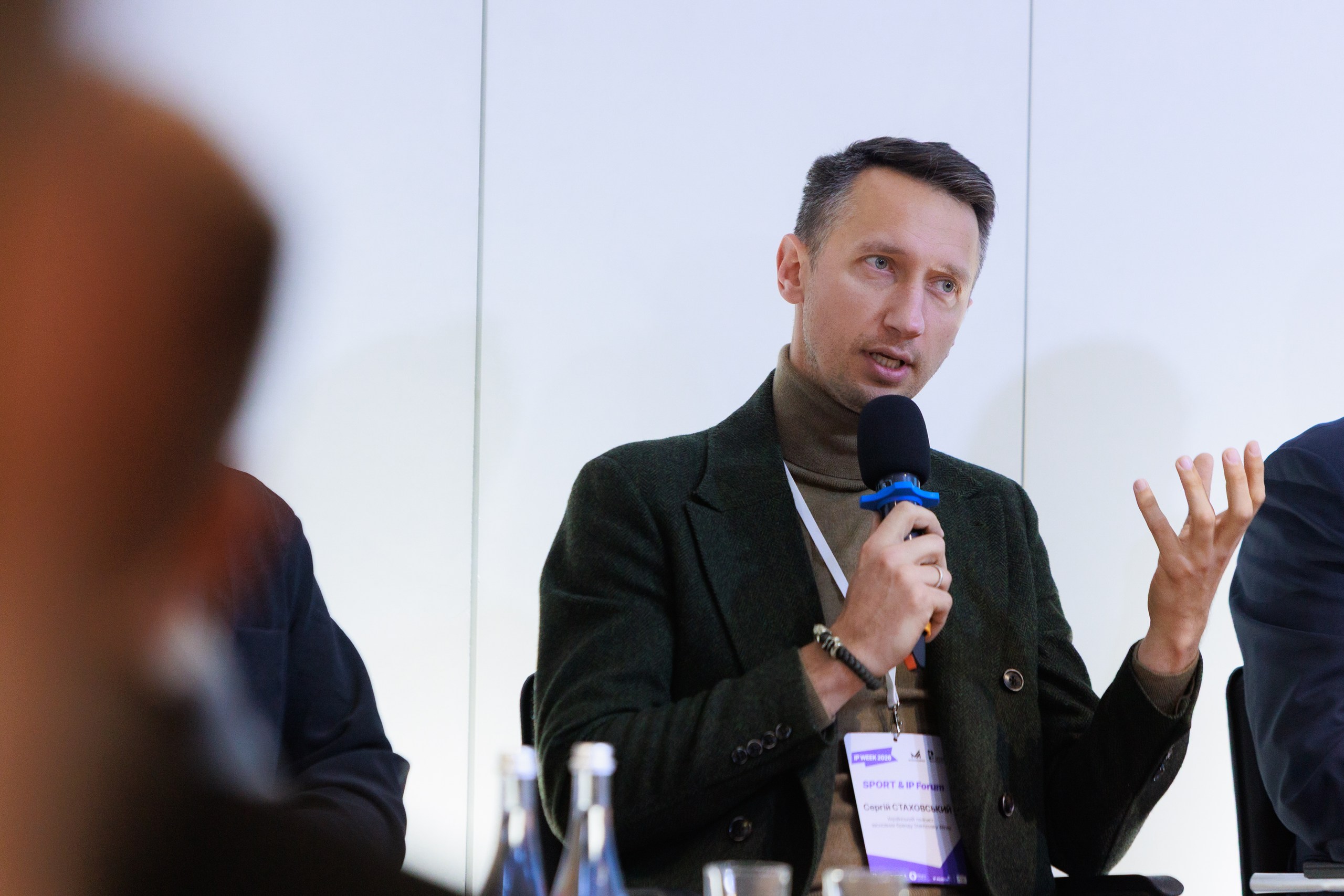
Serhii Stakhovsky
Serhii Stakhovsky, a renowned Ukrainian tennis player and founder of the Stakhovsky Wines brand, joined the discussion. He emphasized that a brand’s name alone is not enough for successful commercialization – the athlete’s reputation and, of course, the quality of the product they promote are crucial:
“I moved abroad for training and preparation when I was still a teenager. And there, professional athletes realize very early on what your name means and what value it holds. Even at a young age, you deal with contracts, restrictions and brand usage rules—and this shapes your attitude toward your own reputation and how name commercialization works in sports.
A personal brand truly offers an advantage: through reputation and recognition, more doors open for you than for other manufacturers or entrepreneurs. But if there’s no quality product behind those doors, it’s a one-time thing. For long-term development, you need a constant connection to the brand, not just a famous name.
In my case, the issue of quality was fundamental also because my surname represents not only me but also my family and its reputation. This was the main internal constraint and, at the same time, the motivation to maintain high quality control. Because a personal brand offers an opportunity, but you can only stay in the market through quality.”
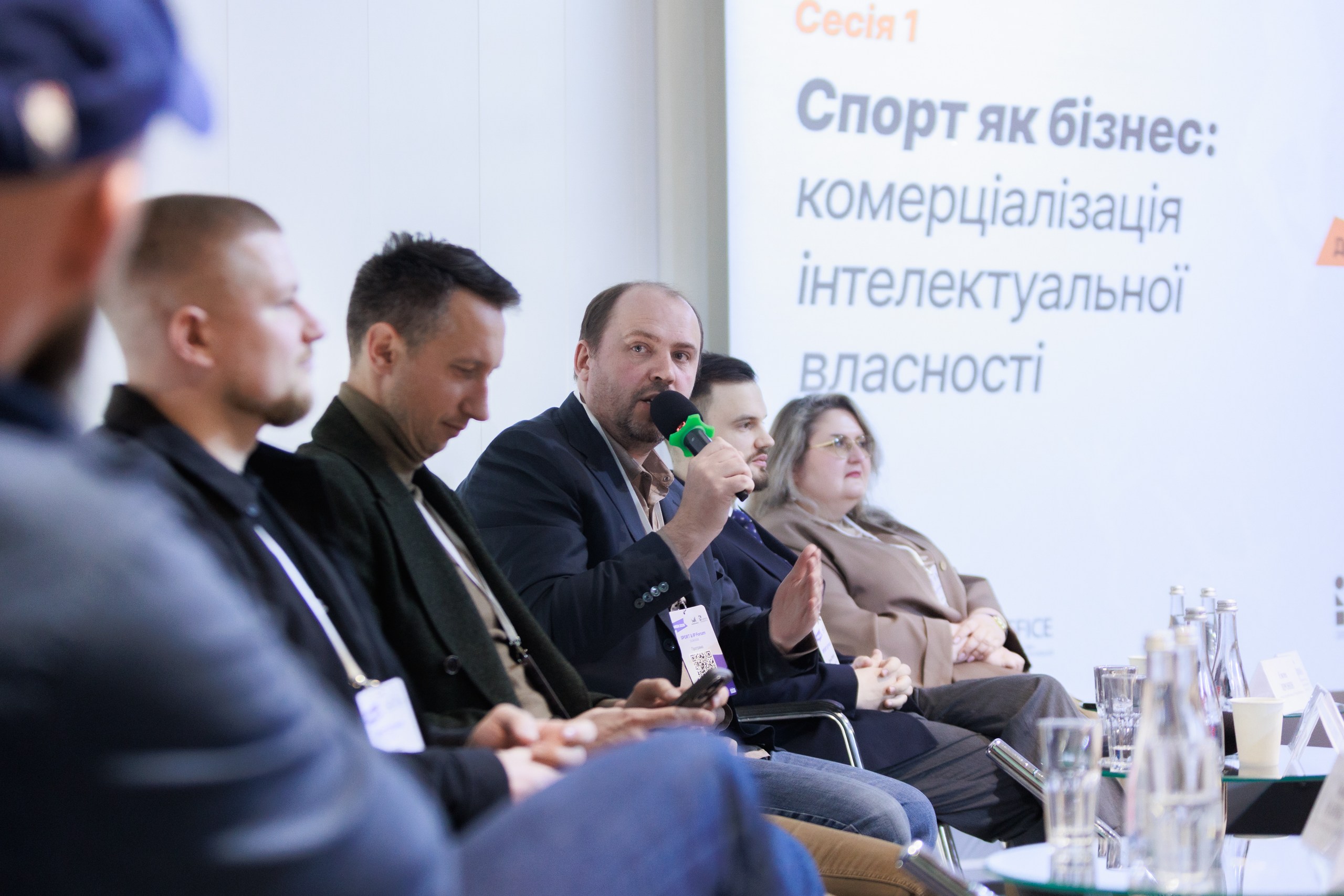
Speech by Vitalii Volochai
Next to speak was Maincast CEO Vitalii Volochai, a well-known Ukrainian sports commentator, who emphasized the unique nature of cyber sports, where the entire ecosystem is essentially built on intellectual property:
“Cyber sports differ fundamentally from traditional sports in that everything here exists due to a specific rights holder. If I want to hold a tennis or basketball tournament, I don’t need permission from the ‘owner of tennis’ or the ‘owner of basketball,’ because no such owner exists. But in cyber sports, without the game’s rights holder’s permission, a tournament, broadcast and any monetization are effectively impossible.
Everything within the game – characters, environments, mechanics, images – is intellectual property. That is precisely why cyber sports clubs are forced to generate revenue primarily through their own brands: through merchandise, uniforms, player likenesses, accessories and fan products. And this is very illustrative: even in an environment where the core is someone else’s IP, commercial sustainability is still built around one’s own IP assets.”
Separately, the speaker raised another interesting topic – commentary as a potential subject of copyright:
“The work of a commentator is undoubtedly a creative process. But in the sports media market, the issue of rights to commentary, the voice and specific phrases has yet to be fully considered. When you’re working on a broadcast, your voice is tied to content whose rights belong to the broadcaster or organizer. At the same time, the commentary itself is also the result of creative work. I think that over time, the market will move toward clearer protection of this type of intellectual property.”
The next speaker – Yevhen Pronin, attorney and managing partner at Pronin & Partners – focused on how athletes can protect and monetize their own intangible assets:
“In global practice, athletes protect more than just their names. This also includes nicknames and pseudonyms (such as CR7 for Cristiano Ronaldo), personal brands and logos (such as Air Jordan for Michael Jordan), autographs, images and image rights, as well as voice prints as objects of intellectual property. All of this becomes a source of income.
In Ukraine, such practices are just beginning to take shape. Often, an athlete begins to think about registering their rights only after a sharp rise in popularity – as was the case, for example, with Andrii Lunin. At the same time, there are more systematic approaches: Yaroslava Mahuchikh has been gradually building her own brand through partnerships and contracts since a young age and Anatolii Trubin is already using a personal logo.
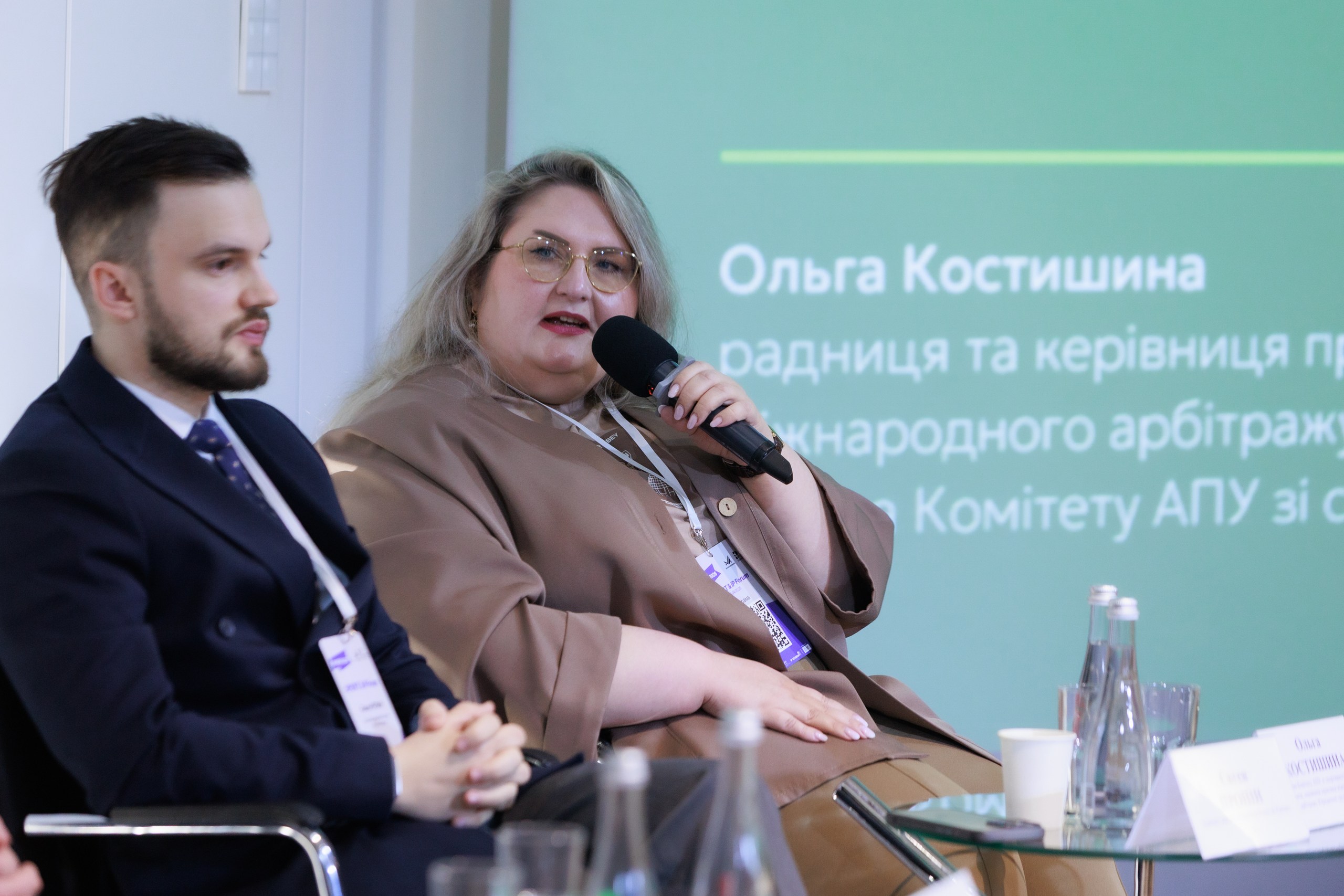
Yevhen Pronin and Olga Kostyshyna
The session was concluded by Olga Kostyshyna, Chair of the Sports Law Committee of the Ukrainian Bar Association, Counsel and Head of the International Arbitration Practice at LCF Law Group. She emphasized the importance of athletes’ legal awareness and a careful approach to drafting contracts – particularly regarding liability, jurisdiction and dispute resolution:
“You can have good legislation and a wide range of tools to protect intellectual property rights, but this only works if the athlete knows how to use these tools. The biggest problem is that at the start, when the first serious contract appears, no one wants to think about disputes, liability, jurisdiction or the procedure for enforcing decisions – everyone thinks only about opportunities and success.
That is precisely why it is crucial to pay attention to the provisions on dispute resolution, applicable law, arbitration clauses and the parties’ liability right at the contract drafting stage. If this isn’t done at the beggining, defending your rights during a conflict will be much more difficult and expensive.
The lawyer an athlete engages when signing a contract is significantly cheaper than the lawyers they’ll have to hire once the contract has already been infringed. So the main advice is very simple: don’t cheap out on legal support at the start.”
For reference:
The SPORT & IP Forum is a platform for professional dialogue among representatives of government institutions, the sports industry, innovators, lawyers and athletes on how intellectual property influences the development of sports: from brand and technology creation to rights protection and the commercialization of innovations. The forum aims to develop practical approaches to the use of IP in the sports industry and to encourage cross-sectoral collaboration.
Photo: Yurii Bielakh
Read also:

No Comments