



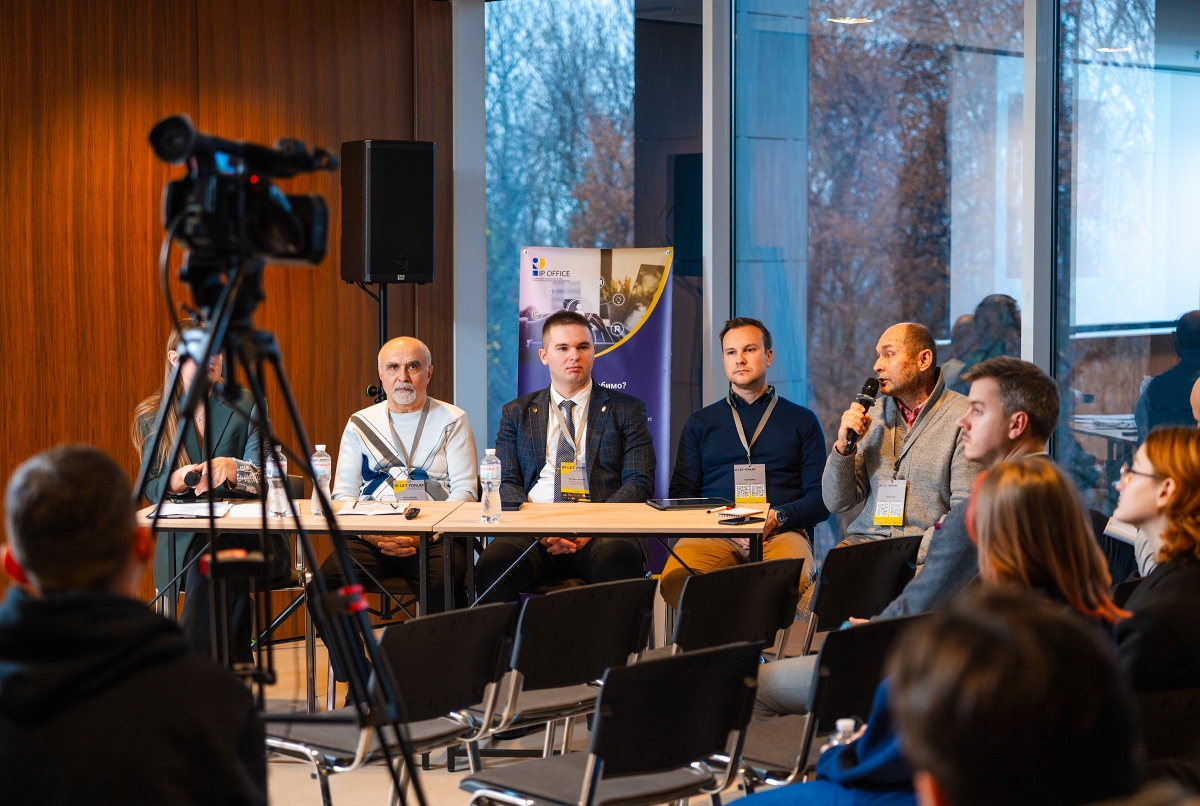
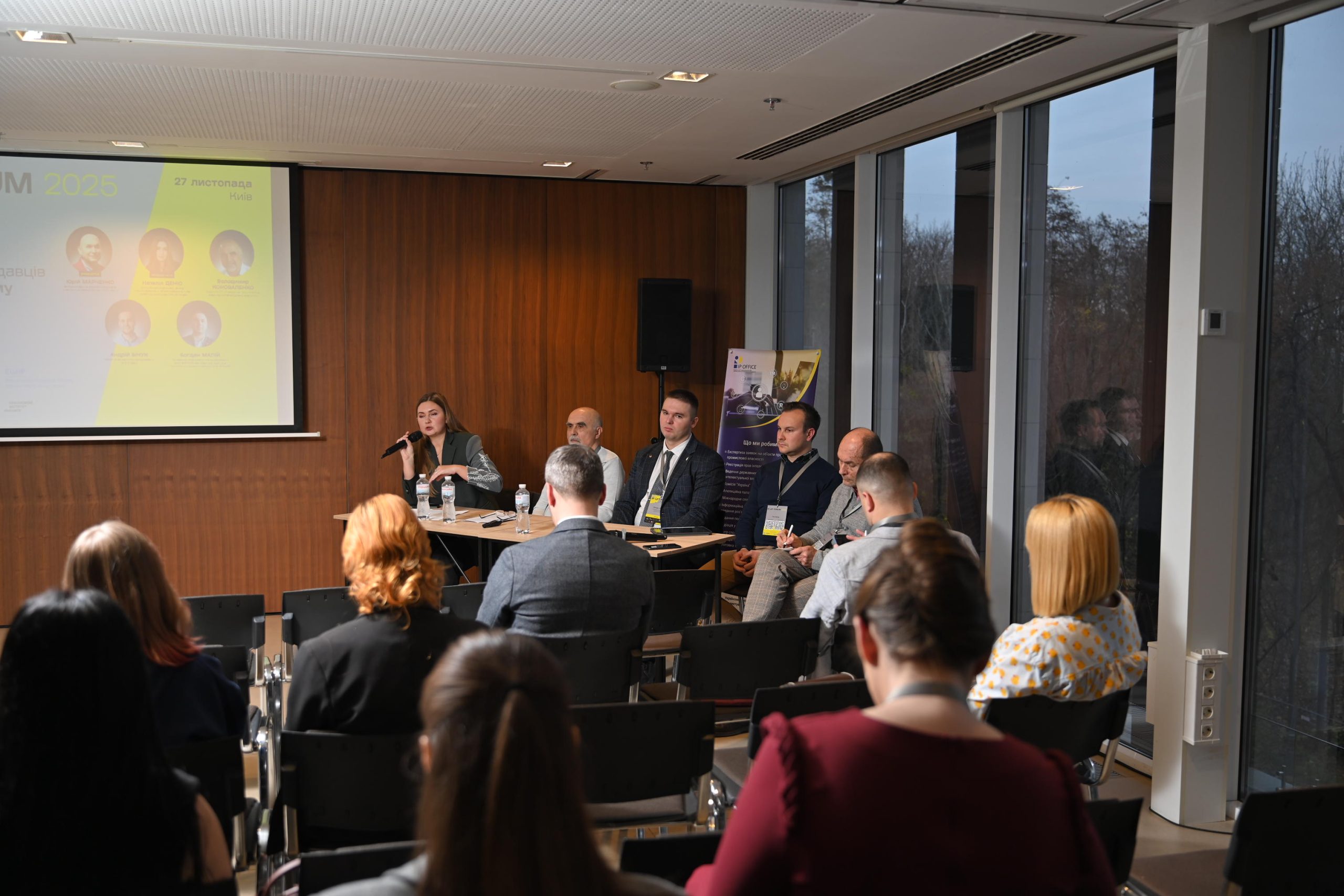
As part of the IV National Forum on Intellectual Property and Innovation “Intellectual Property: Law, Economy, Technology” (IP LET Forum 2025), the workshop for publishers titled “Combating Book Piracy” was held, organized by UANIPIO (IP Office) in cooperation with the Ukrainian Book Institute (UBI).
In a practical discussion format, participants examined real cases of book piracy, the challenges of disabling access to illegal content, and effective enforcement tools. The event served as a platform for an open conversation about one of the most pressing issues facing the Ukrainian publishing sector.
The workshop was moderated by:
Opening the event, Nataliia Denis outlined the broader context of the issue, emphasizing that book piracy in Ukraine is rapidly gaining momentum. In her opinion, citizens often do not realize that by purchasing pirated copies, they are harming not only authors and publishers, but the entire cultural ecosystem of the country. This is why it is especially important today to foster a culture of respect for intellectual property rights and to encourage the legal consumption of content.
The Deputy Head of the IPRs Infringement Monitoring Center emphasized that a systematic combat against piracy begins with awareness – explaining to society why authors’ rights are valuable and what consequences their infringement entails for the economy and the country’s reputation. She also reminded that Ukrainian publishers operate under extremely challenging conditions, especially since the full-scale military invasion of Ukraine began, yet continue to provide the country with high-quality books, demonstrating resilience and professionalism. In this context, the National information campaign ANTI-PIRACY: BOOKS gains particular significance, aiming to raise public awareness and promote lawful access to content.
Within the campaign, the IPRs Infringement Monitoring Center team not only developed educational materials and engaged experts but also created new tools to support rights holders and users. In particular, a workshop presented an initiative to establish a Ukrainian online platform for legal digital content modeled on the European portal Agorateka.
“Based on European experience implemented through Agorateka, we are currently working on developing a Ukrainian catalog of lawful online resources, particularly regarding books. This work is being carried out in cooperation with the Ukrainian Book Institute, with the possibility of involving other interested stakeholders in the future,” noted Ms. Nataliіa.
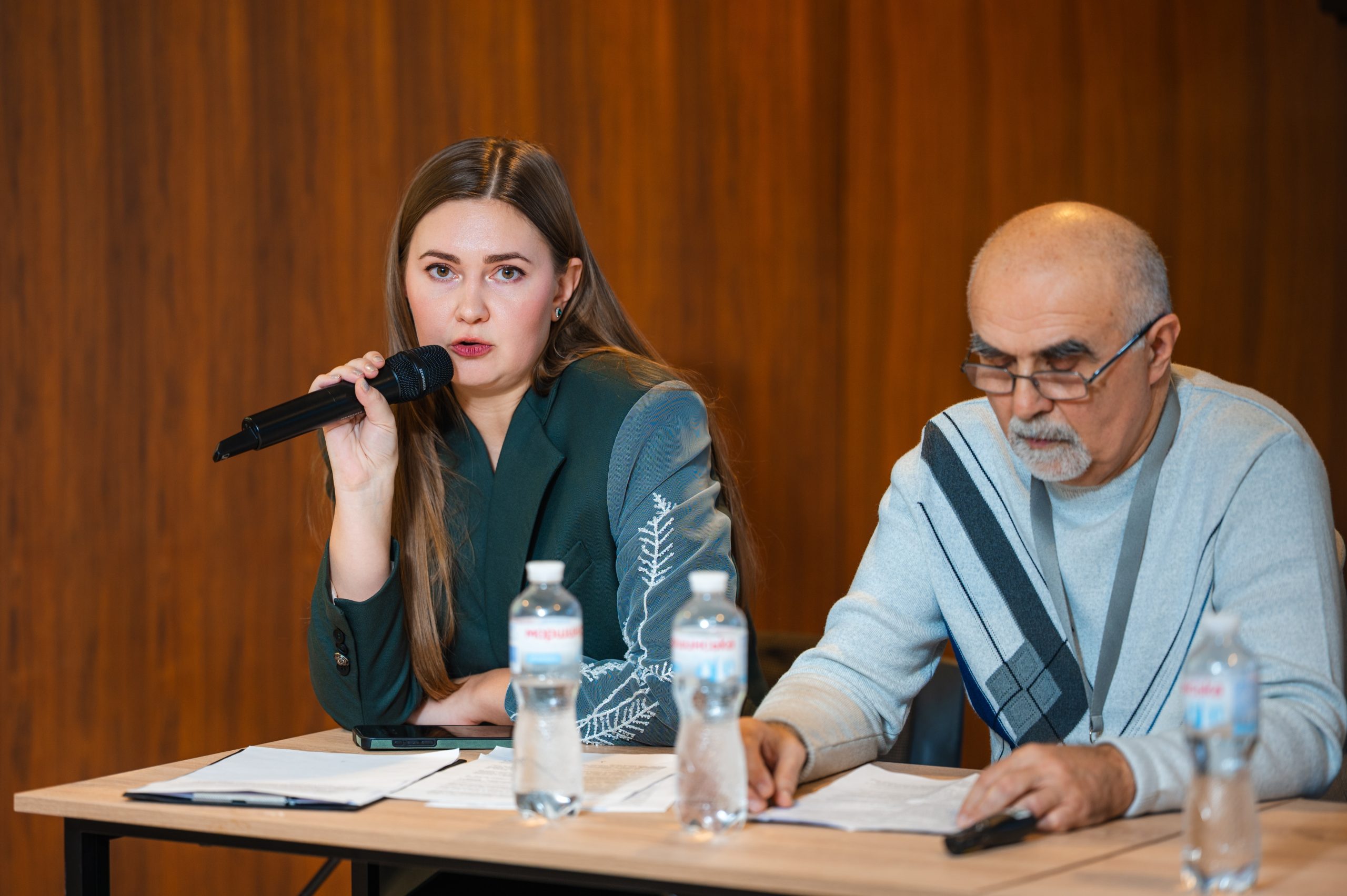
Nataliia Denis, Volodymyr Konovalenko
“The First Million Hryvnias from Hunting Online Pirates” – Volodymyr Konovalenko, Director of the NGO Society for the Promotion of Knowledge on Intellectual Property, shared his experience in combating book piracy.
The speaker shared a proven algorithm for combating pirate websites, which involves the following steps:
1. Monitoring the network to identify websites distributing pirated content.
2. Identifying the domain name registrar through analysis of publicly available registration databases (WHOIS, etc.).
3. Documenting the infringement by creating a video recording or other evidence of the work’s use.
4. Sending a legal inquiry to the domain registrar requesting information about the domain owner.
5. In case of refusal – filing an application with the commercial court to secure evidence prior to filing a lawsuit.
6. Obtaining a court order requiring the registrar to provide information about the domain owner.
7. Receiving an official response from the domain registrar.
8. Initiating negotiations with the identified owner of the resource.
9. Concluding an agreement – either a license (or sublicense) agreement or a settlement agreement.
Volodymyr Konovalenko also presented consolidated statistics on the financial results achieved in the fight against online piracy. Of the total UAH 1,247,765 obtained as a result of terminating copyright infringements online, UAH 250,000 were recovered through court proceedings, while all other funds were obtained through out-of-court settlements, including the conclusion of settlement agreements, license, and sublicense agreements.
According to the speaker, this approach allows for more prompt lawful removal of pirated content and the compensation of damages to rights holders.
The highest revenues were recorded in 2024 – over UAH 551,000 (from license and sublicense agreements, as well as a number of settlement agreements). Significant amounts were also received in 2019 – approximately UAH 260,000.
For more details, see Volodymyr Konovalenko’s presentation (in Ukrainian).
“16 Websites on the Blacklist: What’s Next in the Combat Against Online Piracy?” – Bohdan Malii, Leading professional for Promoting the Enforcement of Copyright and Related Rights at UANIPIO, spoke about the WIPO ALERT database and the Ukrainian experience.
“WIPO ALERT is a tool designed to help advertisers and advertising agencies avoid placing ads alongside illegal content and to prevent the inadvertent support of pirate platforms,” the speaker noted.
Advertisers, advertising agencies, and providers of technical advertising services can become authorized users of WIPO ALERT by submitting a corresponding application to WIPO. Once access is granted, they integrate the platform’s data into their own advertising systems, enabling them to automatically avoid placing ads on infringing websites.
This mechanism helps brands prevent undesirable association with illegal content and reduces the risk of inadvertently supporting pirate resources.
During the workshop, participants were given a detailed explanation of the mechanism for submitting websites to the WIPO ALERT system, as well as the procedure for creating the National List of Websites of Concern regarding intellectual property rights compliance (National List).
A rights holder has the right to submit a request to UANIPIO in cases of repeated or systematic copyright and/or related rights infringements.
The request is submitted regarding a single website and on behalf of the applicant by their representative – a lawyer or a patent attorney.
The following must be attached to the request:
The request must contain information on:
To date, the Ukrainian National List already includes 16 pirate websites, with information on them entered in accordance with the established procedure.
At the same time, the discussion highlighted a number of problematic issues that require further refinement. Among them:
“The platform’s revenue depends on the number of listings, but we have chosen to prioritize combating pirated copies and counterfeit goods,” said Andriy Bichuk, Head of the Legal Department at OLX Ukraine. He explained when marketplaces are not liable for user-generated content and shared up-to-date statistics.
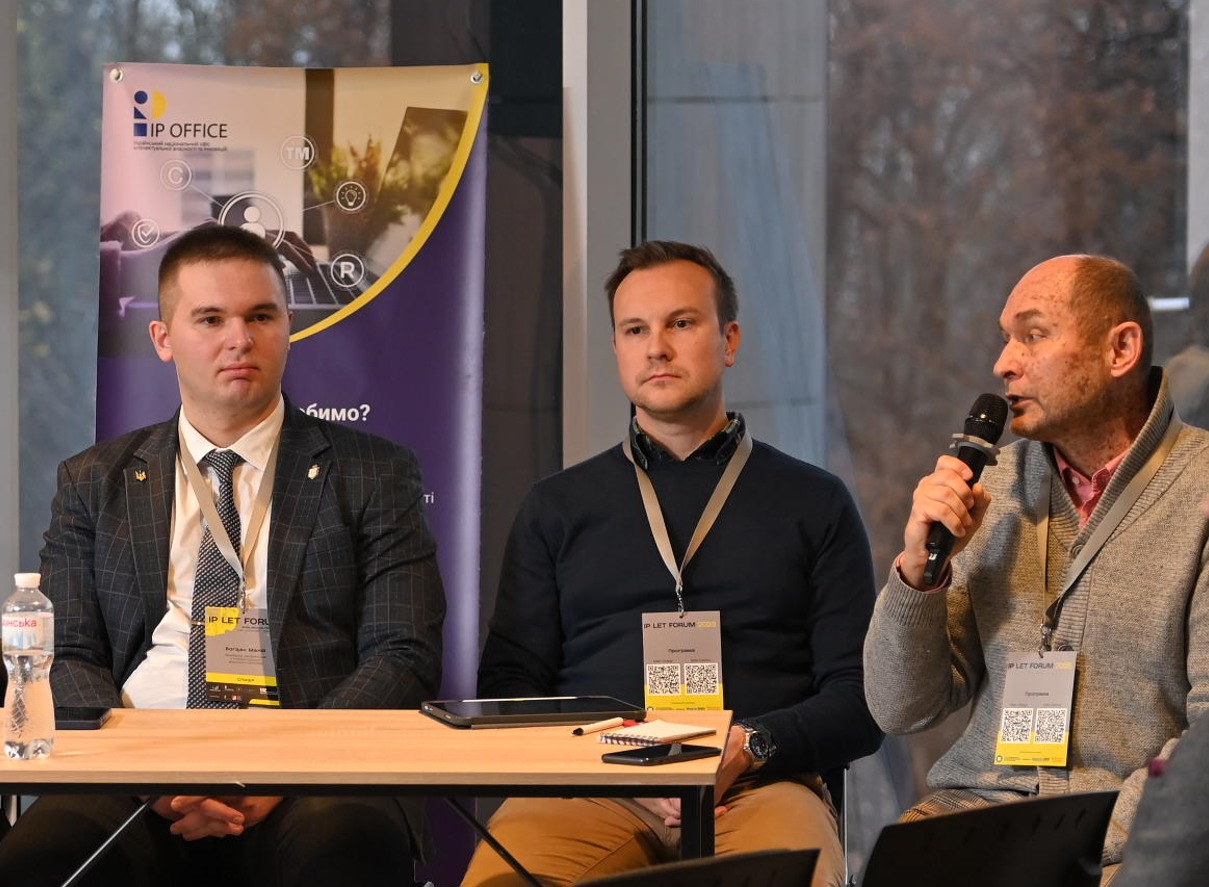
Bohdan Malii, Andriy Bichuk, Yurii Marchenko
During his presentation, Andriy Bichuk explained how the “safe harbor” principle works – a mechanism that determines the circumstances under which online platforms are exempt from liability for user-generated content.
A marketplace is not liable if:
OLX has implemented several technical solutions to combat book piracy. One of these is a filter that blocks listings for the sale of electronic copies of books.
“This tool works effectively: since the beginning of the year, the system has automatically stopped 5,808 attempts to sell electronic versions of books,” emphasized Andriy Bichuk.
OLX also automatically blocks listings in which the seller themselves labels the item as a “copy,” “replica,” or other obvious infringement.
The workshop stood out for its high practical value: participants actively engaged in discussions and asked a number of professional questions to the speakers regarding copyright protection and effective mechanisms to combat piracy online.
A representative of Vivat Publishing shared the results of their work: between April and the date of the workshop, the publisher submitted approximately 700 copyright infringement claims. Of these, around 500 claims were directed to platforms such as OLX, Prom, and Rozetka, and another 200 to other online resources.
According to him, in 90% of cases these claims are successful: infringing content is promptly removed, and the platforms demonstrate a willingness to engage in constructive cooperation.
Special thanks were expressed to OLX, which, according to the publisher’s representative, ensures a swift response to detected infringements and maintains effective communication throughout the removal process.
Participants also asked the OLX representative about the possibility of introducing equivalents of international intellectual property protection tools in the Ukrainian market.
Specifically, the discussion focused on creating a mechanism similar to Amazon’s Brand Registry, which allows rights holders with an official trademark registration to include it in a special registry to expedite responses to potential infringements.
The OLX representative confirmed that developing such a system is a relevant issue. At the same time, he emphasized the importance of considering the platform’s specifics, as OLX is primarily a C2C marketplace, meaning trade occurs between private individuals. Therefore, even with the implementation of a trademark registry, its operation would have certain differences compared to models used on Amazon. Such a tool would undoubtedly facilitate faster and more effective interaction with rights holders, but it is also important to consider the principle of exhaustion of rights, which will influence the procedures for responding to claims.
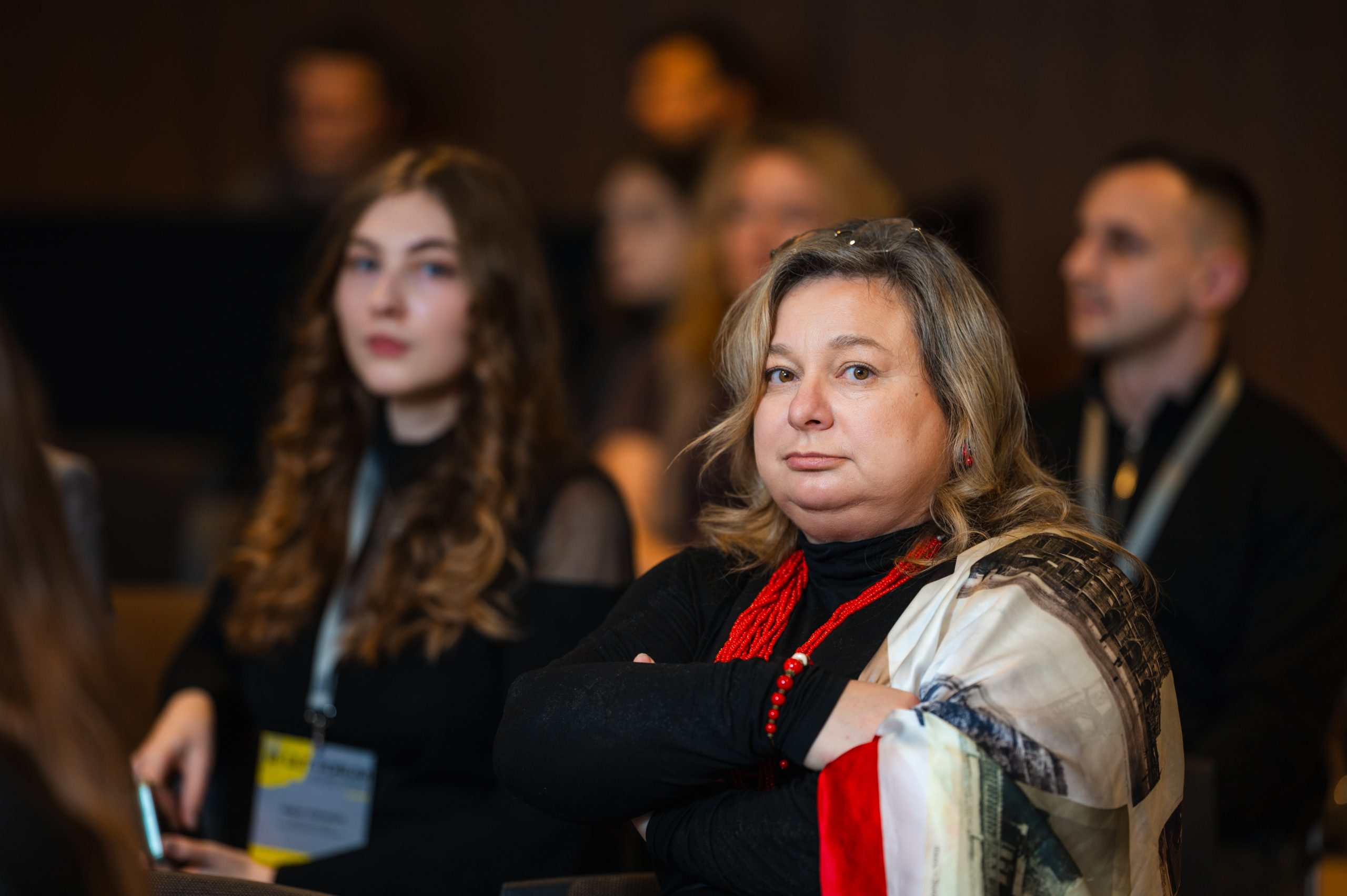
Olena Orliuk
At the end of the workshop, Olena Orliuk, Director of UANIPIO, gave a motivational message to publishers, readers, and all members of the book community:
“I am well aware of the challenges facing the industry. What you are doing is true heroism, because your work shapes the future of our society – from children’s books to every publication that goes to print. The IP Office will always act as a partner in developing IP culture in Ukraine and will support, by all possible means, the enhancement of intellectual property rights protection.”
The workshop concluded with a shared understanding that effective combating of book piracy is possible only through the consolidation of efforts by publishers, government institutions, online platforms, rights holders, and even readers. Participants emphasized the importance of awareness-raising, the development of tools such as WIPO ALERT, the creation of a Ukrainian legal content platform modeled on Agorateka, and strengthened cooperation with marketplaces.
Practical cases, statistics, and expert experience demonstrated that systematic, coordinated work yields tangible results, enables prompt responses to infringements, and gradually fosters a culture of legal consumption in Ukraine.
The full video recording of the workshop “Combating Book Piracy” is available for viewing on the IP Office’s YouTube channel:
Reference:
Useful Resources:
Read other news from IP LET Forum 2025:
Ukraine on the global IP map: results of the first session of IP LET Forum 2025 – key ideas (video)
IP LET Forum 2025: presentation on new business opportunities in the IP field
IP LET Forum 2025: Technologies of the future and IP (session summary, video)

No Comments