



The Ukrainian National Office for Intellectual Property and Innovations (UANIPIO / IP Office) is launching a new project, IPeopleUA. The project is about people who create intellectual property and those who help register it, ensure its protection and defend it.
IPeopleUA aims to reveal the meaning and value of IP through the stories of Ukrainians, as well as to demonstrate how intellectual property works in real life: help to develop creativity, build reputation, scale businesses, enable commercialization, and preserve intellectual heritage.
The stories in the project highlight creators, inventors, innovators, founders of brands and startups, scientists, patent attorneys, IP lawyers, and other representatives of the intellectual property field. Each of them discovers intellectual property in their own way: through creativity, innovation, business, science, family craft, or profession.
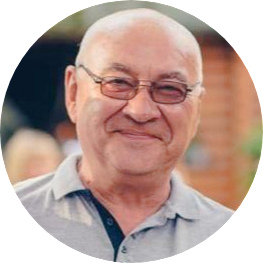
The first story in the IPeopleUA project features Serhii Andriushchenko
An entrepreneur and a fourth-generation beekeeper who, after losing his home, business, and family apiary due to the war, rebuilt the enterprise in a new place. His story is about continuity and responsibility, about revival after loss, and about realizing the value of intangible assets. It is about why tradition is important not only to continue, but also to protect.
“In June 2022, our house was destroyed. Along with it ‒ our entire past life. The apiary with its century-long history was gone too”
‒ Mr. Serhii, the story of your family is closely connected with the apiary and beekeeping. Tell us how it all began.
‒ Imagine the steppe in the Donetsk region. But not the way it is now ‒ strewn with mines and drones ‒ rather the way it was long before the russian invasion, some thirty years ago. It is the middle of summer, the heat is intense, the harvest is underway in the fields, a mobile apiary stands in a shelterbelt, and somewhere nearby the Shaitanka River flows. Not far away, rows of beehives are lined up neatly. The bees are buzzing, working. In the air there is a mingled scent of blooming sunflowers, thyme, bitter St John’s wort and buckwheat, along with freshly cut wheat ‒ a smell you can never forget…
And there is the lively hum of people ‒ parents, children, grandchildren, in-laws, friends. After a day’s work with the bees, the adults prepare dinner, set long tables under a canopy, laugh. One of the older men takes up an accordion and begins to play, people sing. Or someone among the elders recites poetry… In those days we were all together, all alive, all our own.
My father kept the apiary. Every summer he would take it out to the fields, and it was there that we celebrated all our family holidays. The apiary was what brought us together.
He inherited his love for beekeeping from his grandfather ‒ my great-grandfather ‒ and he in turn from his own. So beekeeping in our family is a matter of generations. But it was my father who turned it into a real business. It was extremely important to him that the honey should contain not only nectar from field flowers and trees ‒ acacia and linden ‒ but also from wild herbs with medicinal properties. He made honey liqueurs, propolis tinctures, rendered wax and supplied it for candle production, delivered it to specialized beekeeping shops to be made into foundation sheets, and sold bee bread in bulk for pharmaceutical production. At one time even large confectionery factories purchased our honey.
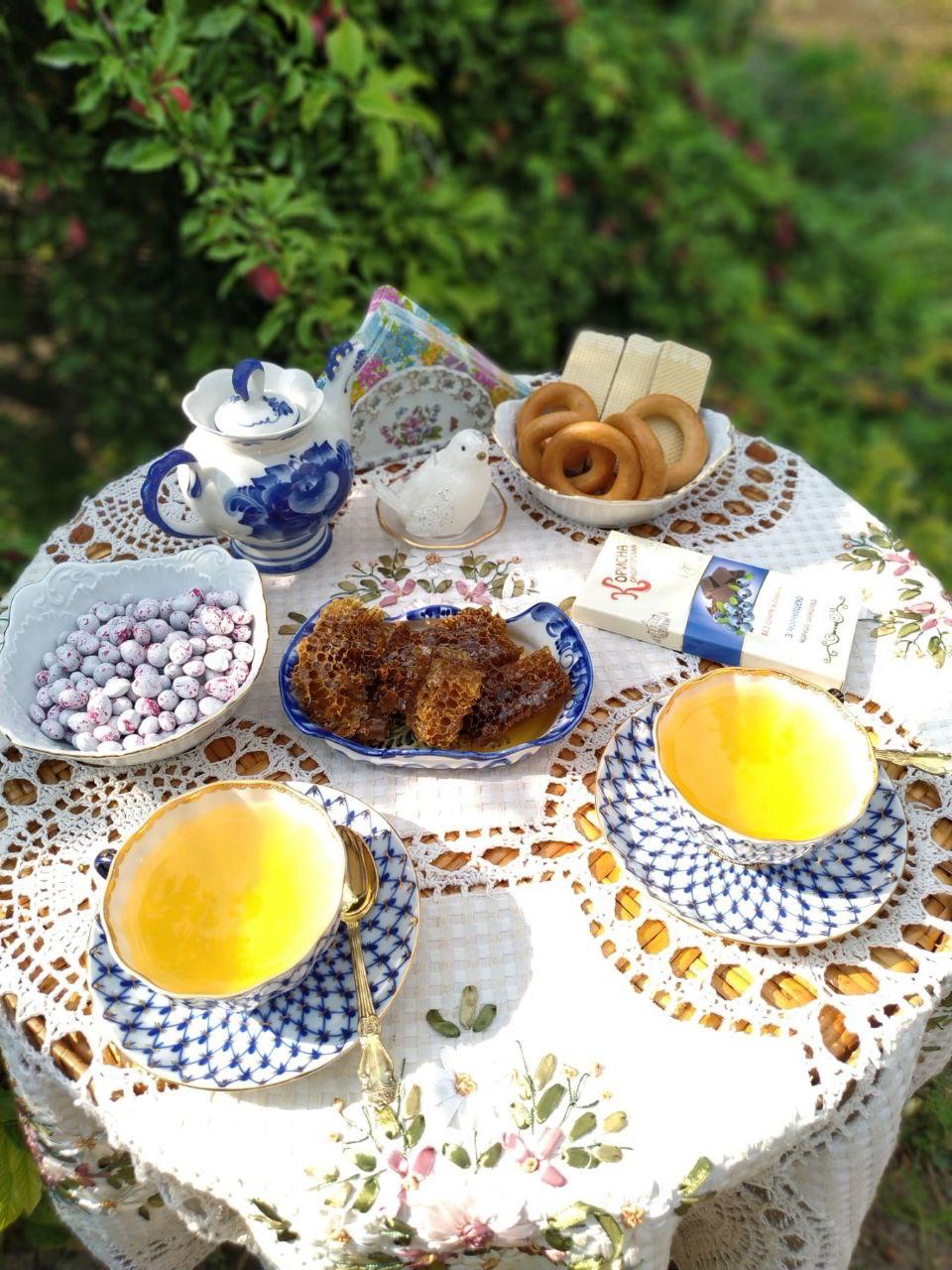
When did I take up this work? In fact, I am an engineer by education. At first I worked as a chief engineer at an enterprise in the Donetsk region. In the 1990s, during the collapse of the Soviet system, I decided to develop the family agricultural business. Things were going quite well. We had land, grew sunflowers, wheat and other grain crops, had machinery and hired workers. That was how we worked. How we lived. We raised children and grandchildren. We cultivated a garden. We kept an apiary.
And then the war came to our Velyka Novosilka district of the Donetsk region…
‒ When did this happen?
‒ Our settlement was occupied in early March 2022. On March 22, russian soldiers came to our home. They saw that the house was solid, with a generator and a well ‒ and simply forced my wife and me out. Without our belongings, without documents. We ended up outside just as we were, in our tracksuits.
We spent 48 days under occupation. Like other people, we hid in basements and tried somehow to survive. There was a period when, because of heavy shelling, we did not leave the basement for a week. Before the war we used to travel a lot and had a completely different standard of living ‒ and suddenly we were there, not even knowing whether we would live to see the next day.
At first it was almost impossible to leave: bridges had been blown up and the roads were under fire. At the first opportunity in April, we decided to try to get out. Our car came under fire; we had to drive around through fields and were afraid of hitting mines. But we could no longer stay there.
My wife, my mother, and I left together. For my mother it was a terrible shock ‒ after everything she had been through, her health deteriorated sharply. In July 2022 we lost my sister ‒ she was killed in a missile strike. A year later her husband was also killed. We do not even know where they are buried.
In June 2022 our house was destroyed. Along with it ‒ our entire past life. The apiary with its century-long history was destroyed as well. The warehouses with sunflower seeds and our agricultural machinery were also lost.
“I received a grant to restore the apiary. The goal was not only to revive family traditions, but also to help other displaced people believe in themselves and start over”
‒ After everything you went through, what helped you not to break down and to continue your work?
‒ After leaving the occupation, we settled in Odesa. Having lost everything, the only thing I could restore was the apiary.
One day I learned that the international organization Caritas, together with the Odesa Regional State Administration, had announced a competition of business projects for internally displaced people. To be honest, at first I was skeptical. It seemed like something complicated ‒ applications, business plans, presentations.
But my wife and daughters supported me. They helped prepare the documents, structure the idea, and formulate the mission. The project went through several stages of selection: first hundreds of applications, then 64, then 30, and finally 10 finalists. I remember that after my presentation I thought I would not make it ‒ the projects were very strong. But two weeks later I received a message: I was the winner.
I received a grant to restore the apiary. The goal was not only to revive our family traditions, but also to help other displaced people believe in themselves and start again. Because there are many people like us ‒ who have lost everything.
Since we were living in an apartment in Odesa, we had to find land where the apiary could physically be located. It was important to find a place with the right ecosystem. Western Ukraine did not suit me because the flora there is different and there are mountains. The Kyiv region has too cold climate. The south is dangerous due to constant shelling, and for bees that is a great stress.
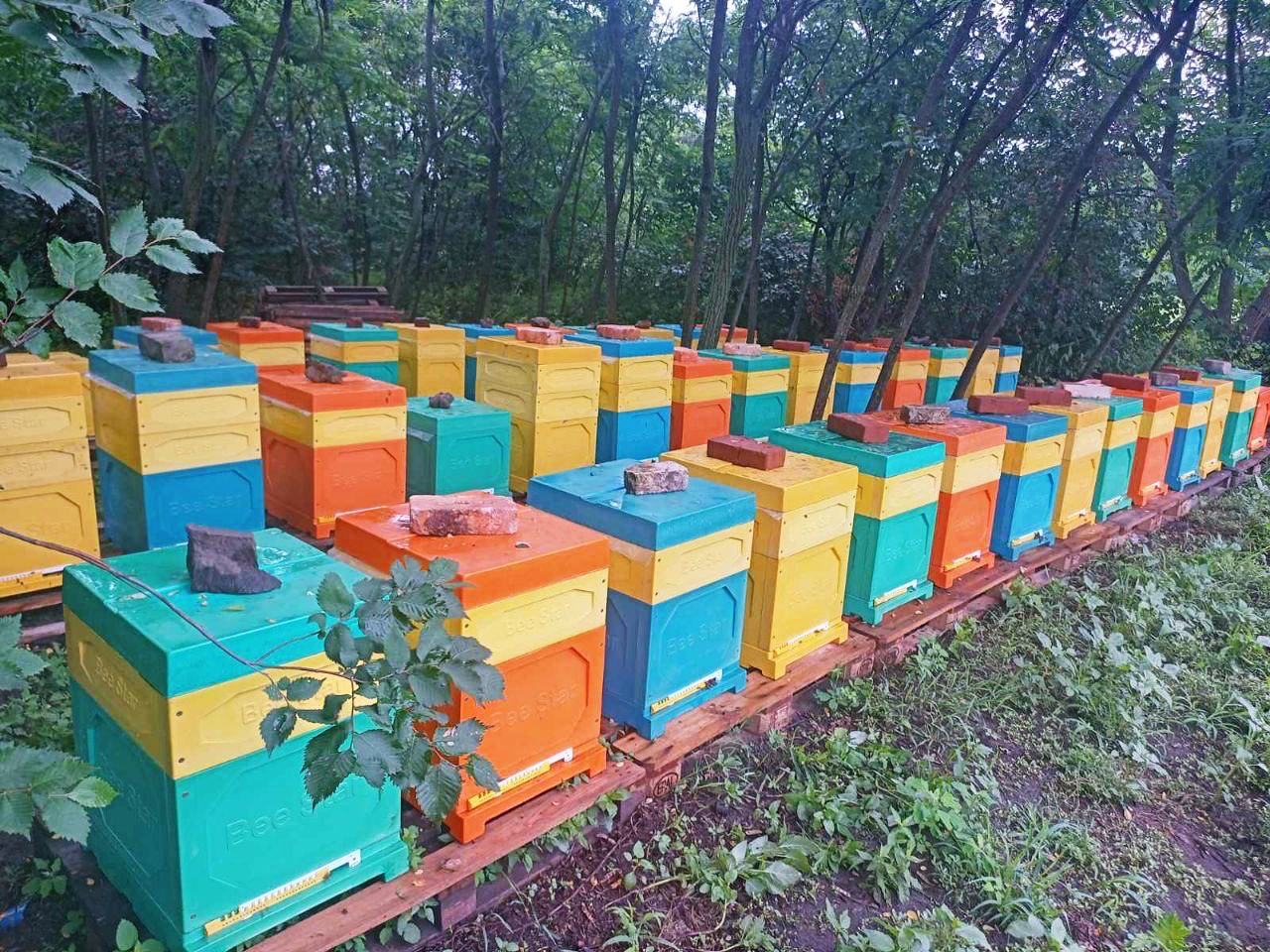
I eventually chose the Kirovohrad region ‒ on the banks of the Southern Buh River. There is a combination of everything that is needed: old acacia trees, linden, wild herbs ‒ thyme, St John’s wort ‒ sunflower fields, and pine forests. All this reminded me of my native land. The flowering comes in waves ‒ from early spring to summer. For me this is important: honey should not come from just one crop, but be multi-component, with healing properties.
In the very first year of the apiary’s operation, we had our first honey harvest.
“All the achievements of almost a century burned down along with my parents’ house. Today, this is a lost heritage ‒ with no possibility of legal protection or recovery”
‒ Do you consider protecting the results of your work through intellectual property tools?
‒ Yes, I am seriously thinking about it. The area where my apiary is now located ‒ the Kirovohrad region, on the banks of the Southern Buh ‒ has a unique combination of natural conditions that shapes the distinctive composition and taste of the honey.
I closely follow the work of the Ukrainian National Office for Intellectual Property and Innovations. When I read about the registration of “Zakarpattia Honey” as a geographical indication, I realized that such tools really work and help protect a unique product and its reputation.
For now, I am still at an early stage in developing the apiary, but in the future I am considering the possibility of registration ‒ either as a geographical indication or in other forms of legal protection. For me, it is important that a product that has a clear connection to a particular place and traditions is properly protected.
‒ Do you have experience in registering intellectual property, and how has your attitude toward IP changed?
‒ I hadn’t registered anything before. And now I realize that was a mistake.
My father ‒ a third-generation beekeeper ‒ developed new bee lines and created his own methods for managing the apiary, including care, processing, and honey extraction. This was a huge practical and breeding experience. Some of his work was done in collaboration with specialists from Zakarpattia. Unfortunately, none of these methods were ever formalized as intellectual property. The documentation ‒ the achievements of almost a century ‒ burned along with my parents’ house. Today, this is a lost heritage, without any possibility of legal protection or recovery.
Now I look at my work differently. If you are going to develop beekeeping, you need to understand the value of intangible assets. Traditions are the memory of the family, and intellectual property is a way to preserve that memory and pass it on.
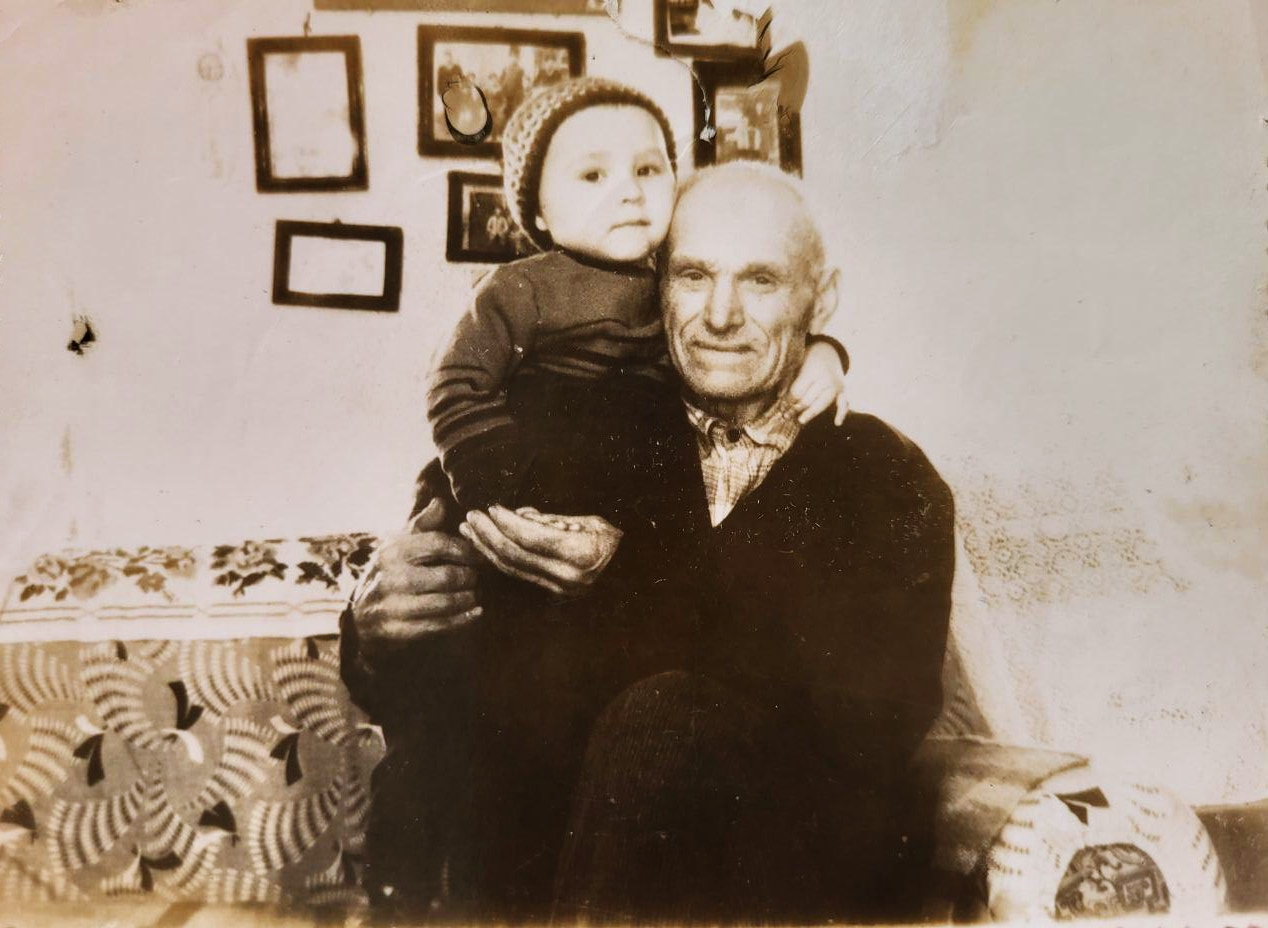
Serhii Andriushchenko in his childhood with his great-grandfather, Pavlo Dementiyovych Pavlenko, a participant in World War I who survived captivity, returned to his family, and founded the family apiary.
‒ What does this apiary mean to you today?
‒ It heals me. It brings me back to life.
When you lose everything ‒ your home, your work, your loved ones ‒ it feels as if the ground beneath your feet disappears. Bees discipline you, calm you, give you a rhythm, and even the fatigue from working with them is a pleasant fatigue. I work with my hands again: assembling frames, and beehives. My wife helps me a lot; she is my friend and life partner.
For me, the apiary is not just a business. It is a memory of happy summers when the whole family gathered together, when we were truly happy. It is something I can pass on to my grandchildren.
I cannot bring back the house. I cannot visit the graves of my loved ones. But I can preserve the tradition.
And if you can turn a hobby into your life’s work, then that is the best way to start all over again.
Photo – from Serhii Andriushchenko’s family archive.
Read also:

No Comments