



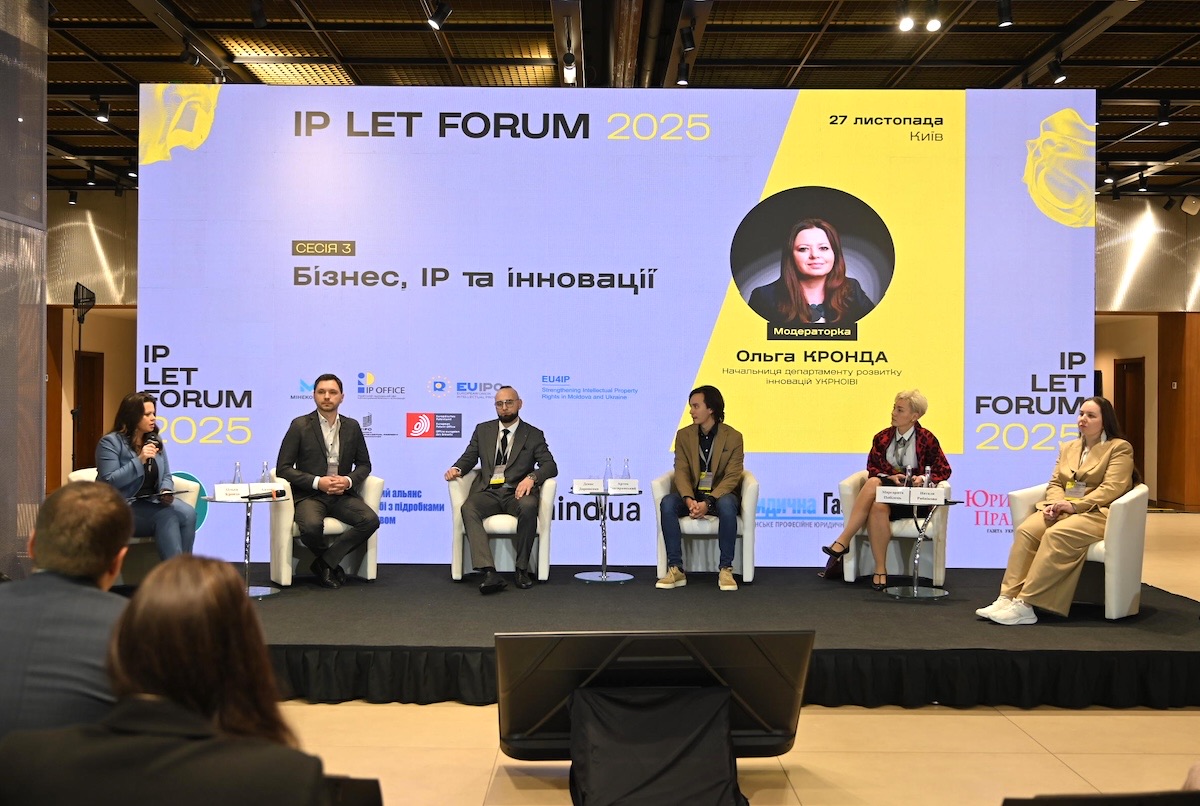
The forum featured a discussion on how Ukrainian entrepreneurs create, protect, and scale IP assets.
The third session of the IV National Forum on Intellectual Property and Innovation “Intellectual Property: Law, Economy, Technology” (IP LET Forum 2025), which brought together international experts, representatives of the State, business, science, innovative and creative industries, was entitled “Business, IP and Innovation.”
It covered such important topics as:
The panel was moderated by Olha Kronda, Head of Innovation Development Department at the Ukrainian National Office for Intellectual Property and Innovations (UANIPIO/IP Office), who emphasized the strategic importance of intellectual property for business and Ukraine’s innovation economy:
“Intellectual property is based on talent, technology, and the courage to create something new. Today, as Ukraine integrates into the European space and rebuilds a modern innovation economy, issues of rights protection, access to financing, commercialization of developments, and international scaling are reaching a whole new level.
I am very pleased that intellectual property is no longer purely a technical and legal issue. It is now about the economy, money, and the formation of strategic assets that allow businesses to enter global markets. That is why today we are talking comprehensively about IP and innovation through government programs, European support, the experience of large companies, and real stories of entrepreneurs who are going through the process of creating an idea, protecting it, and commercializing it in practice.”
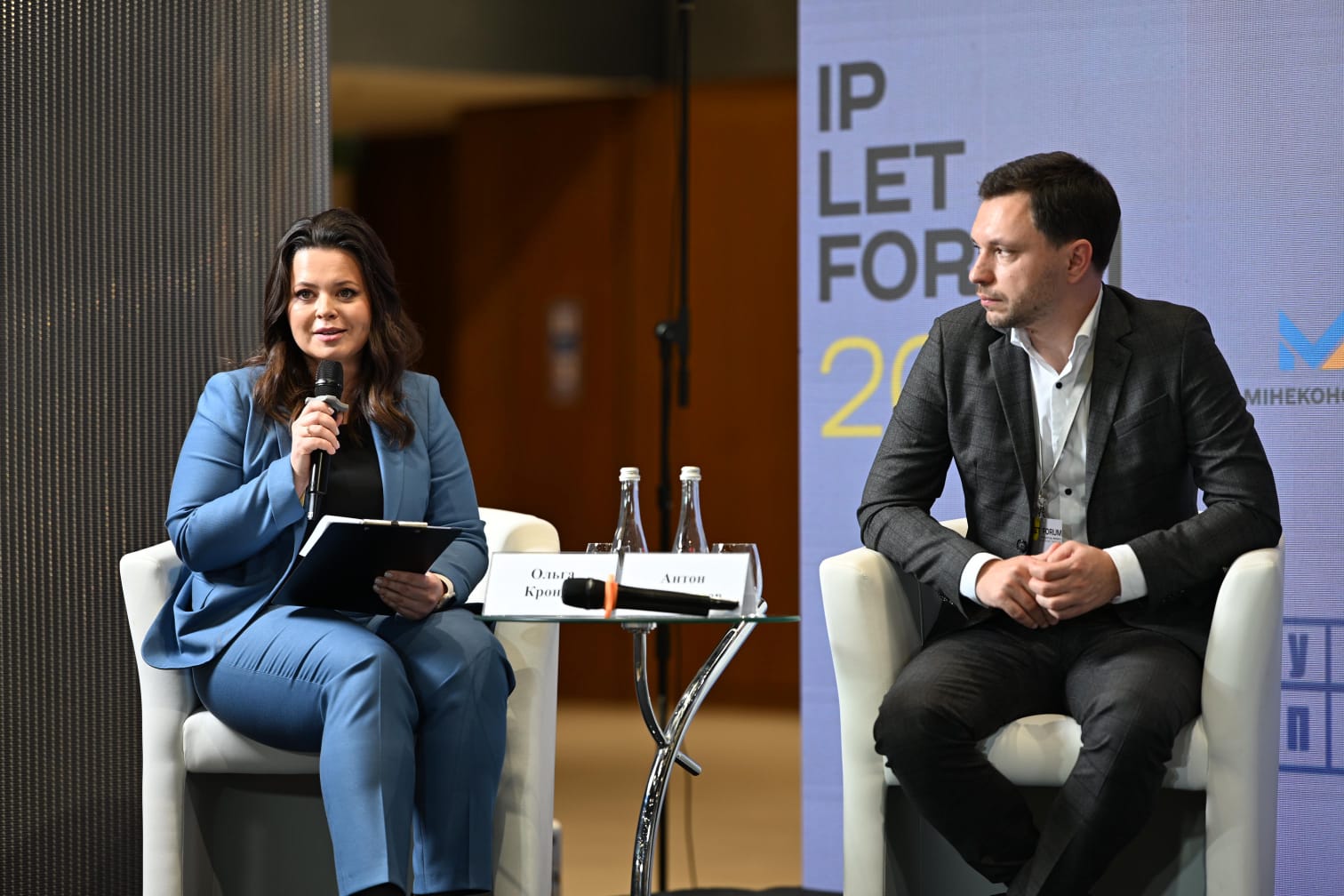
Olha Kronda, Anton Polikarpov
Next, the floor was given to session participants, including Anton Polikarpov, IP Expert/Activity Coordinator EU4IP Project in Ukraine. The speaker explained in detail the opportunities offered by the SME Fund and EU4IP programs and their impact on Ukrainian business and European integration processes in the field of intellectual property:
“The SME Fund is a tool that allows small and medium-sized enterprises to compensate for a significant amount of the costs of registering trademarks, patents, and other IP objects. Ukraine gained access to this program in 2023, and it really works: enterprises can recover about 70% of official fees. In fact, we are the only country outside the EU that participates in this mechanism at the level of member states.
Unfortunately, Ukrainian businesses are not yet making sufficient use of this tool: last year, only about 100 applications were funded, while in Poland or the Baltic states, the number was dozens of times higher. This is an issue of both awareness and attitude towards IP, which we need to shape.
The second tool is the EU4IP project, which I coordinate in Ukraine. Its goal is to help countries moving towards EU membership harmonize their intellectual property legislation and institutions aligning to European standards. EU4IP provides expert support for the adaptation of legislation: specialists from the IP Offices of EU countries work on each project. We do not simply transpose regulations — we adapt them to Ukrainian realities and practices.
In addition, the project organizes training and experience sharing for customs officials, judges, and patent experts, supports professional training, and helps develop the institutional capacity of the system. In 2026, we will enter an active phase — the adoption of a series of legislative changes and the further practical integration of Ukraine into the European IP space.
We are working to ensure that Ukraine does not just formally approach European standards, but fully integrates into the European innovation ecosystem. This is the basis for effective protection of rights and strengthening the competitiveness of Ukrainian business.”
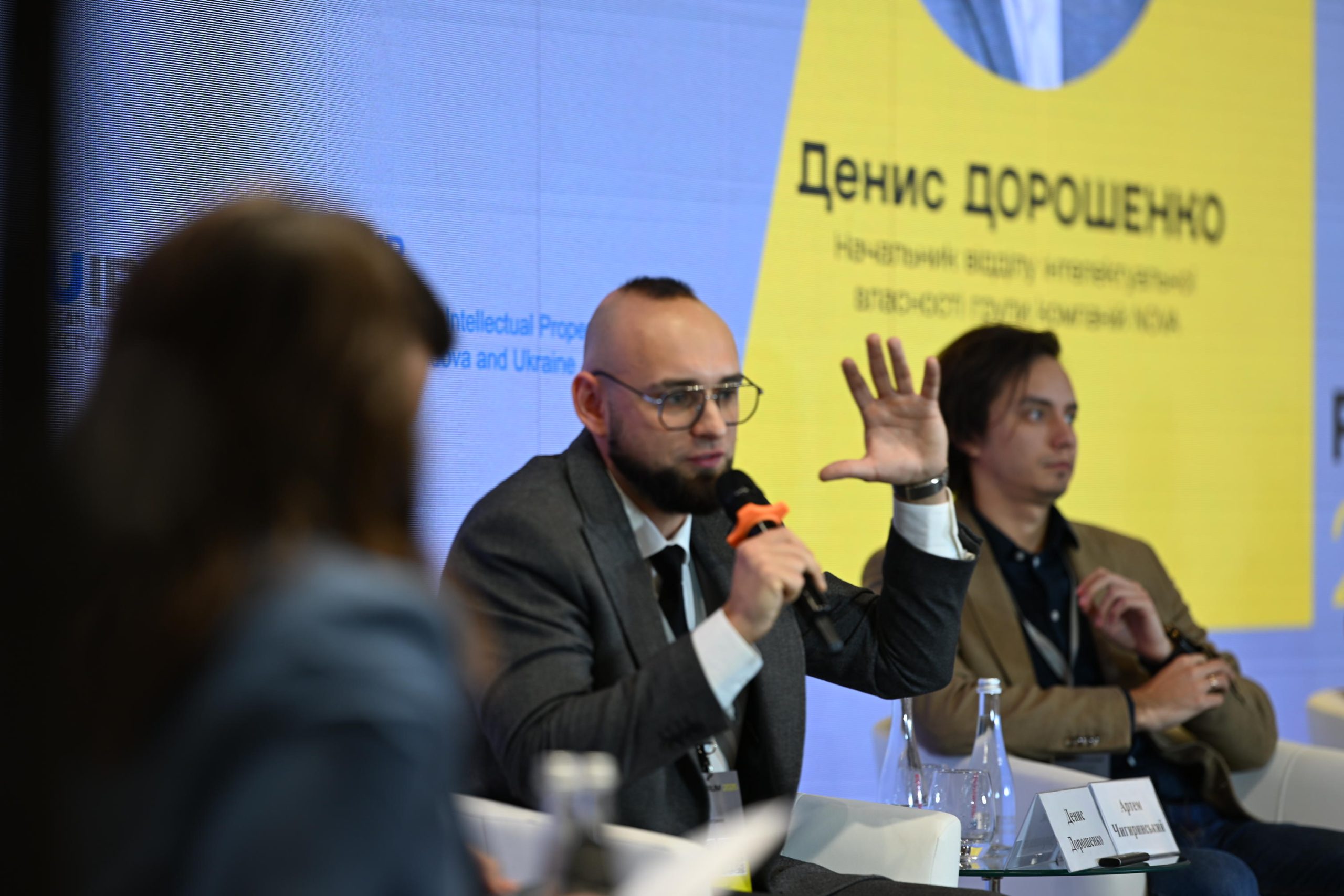
Denys Doroshenko
Next to join the discussion was Denys Doroshenko, Head of Intellectual Property at NOVA Group, who shared his practical experience in building an IP strategy in a large multi-directional business:
“In such a large business ecosystem as the NOVA Group, it is possible to build a unified IP strategy, but to do so, we had to change our approach to creating and protecting intellectual property. Previously, IP assets were created chaotically, in different directions and without centralized control. Now we have formed a separate department that consolidates all processes: from idea generation to registration and further protection.
We have also created an internal register of intangible assets, built a unified route for each IP object, and ensured centralized monitoring — from domains and trademarks to blocking fraudulent websites. This has significantly reduced risks and disciplined the process of creating new solutions.
Before entering new international markets, we always conduct an IP audit. For example, this was the case with the USA: we checked the possibility of protecting the NOVA designation, obtained trademark registration, and conducted domain monitoring, which allowed us to safely launch our operations. We also check risks in other countries — from the patent environment to freedom to operate.
Our experience shows that intellectual property is no longer just about registration. It is about management, strategic planning, and the ability to protect your business globally.”
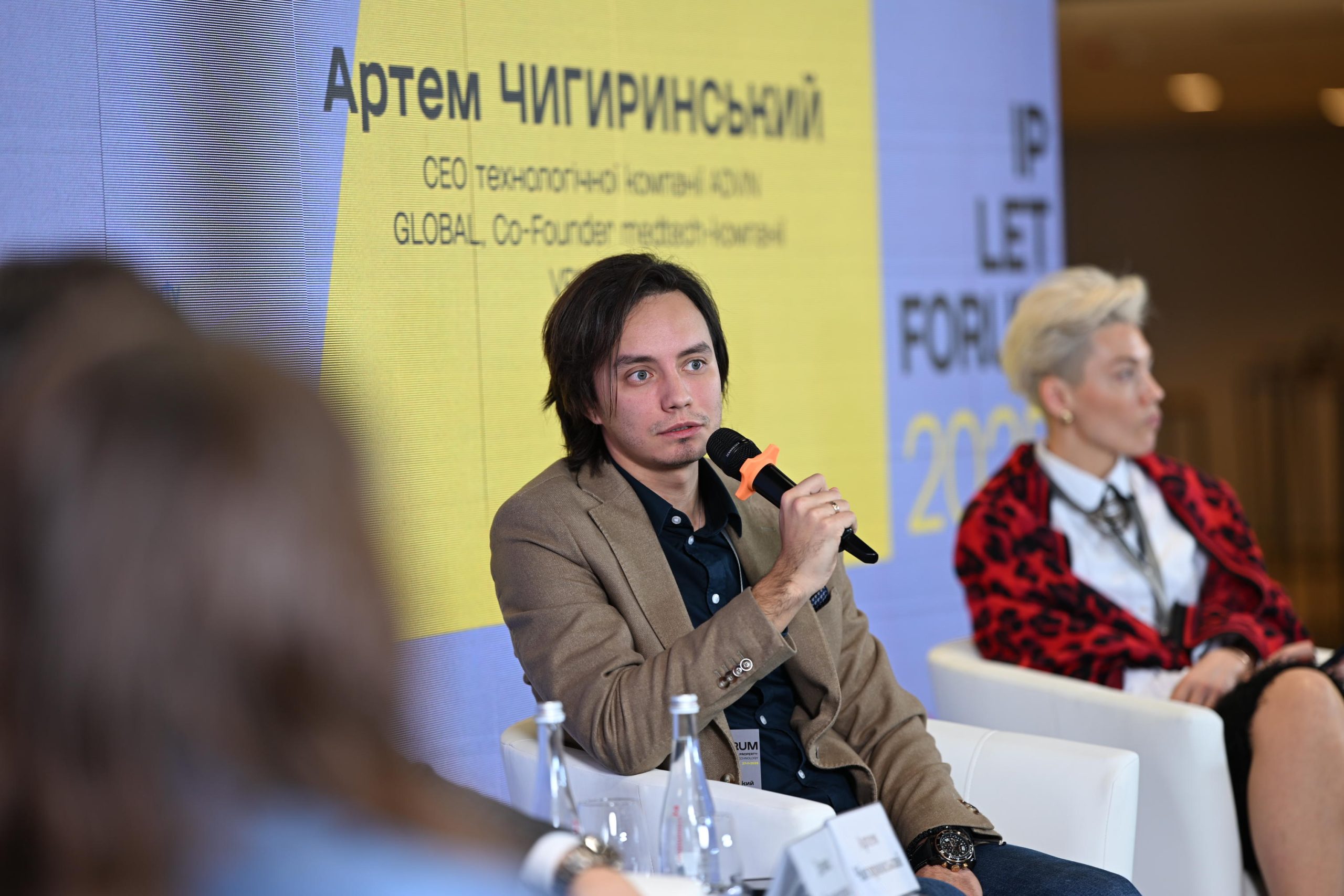
Artem Chigirinsky
Artem Chigirinsky, CEO of technology company ADVIN GLOBAL, Co-Founder of medtech company VRNOW Lab, also took part in the discussion, emphasizing that intellectual property is the basis for capitalization and scaling for technology companies:
“Our companies operate in the VR/AR sector, and many of the solutions we create, from software code to rehabilitation simulators, only become assets when they are registered as intellectual property. Copyrights on software code and patents on technologies are what transform development into a real business asset.
Ukrainian tech companies often remain mere suppliers of working hours, but real value arises where proprietary products are created. And this is where intellectual property plays a key role: it forms an asset, increases product capitalization, and opens up opportunities for investments.
In our case, the patent for VR technology for rehabilitation after limb loss is an example of how innovation becomes a protected asset that can be scaled and commercialized.”
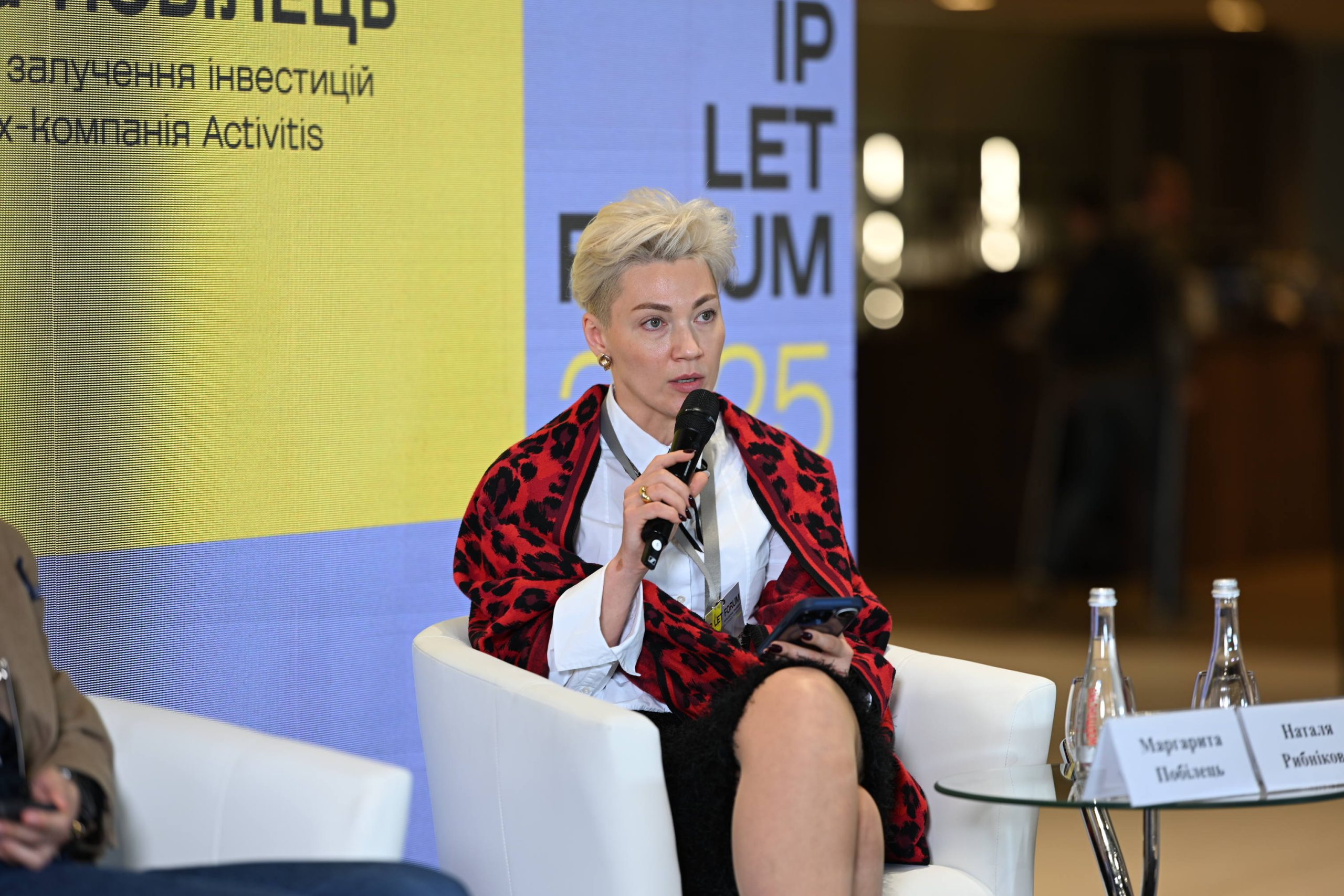
Margaryta Pobilets
Next to speak was Margaryta Pobilets, Head of Investment and Capital Direction at fintech company Activitis, who emphasized that intellectual property is one of the key factors in investment decisions:
“For investors, the existence of registered patents, copyrights and trademarks is a crucial indicator of business security. First, IP minimizes the risk of product copying by competitors and preserves investor capital. Second, it directly boosts the company’s capitalization, as intangible assets often make up a significant part of its real value. There are tons of global examples where a brand is valued higher than all tangible assets, from Coca-Cola to McDonald’s or Nike.
Investors also look at the potential for monetizing intellectual property. Licensing, joint development, and white label models are additional sources of income that make a business more attractive. This is especially characteristically for technology companies.
A separate aspect is the possibility of attracting debt financing. In a number of jurisdictions, IP can be used as collateral for loans and companies that have registered rights, gain access to cheaper capital.
Finally, legal clarity — registered rights, properly documented transfer of copyright in contracts, clear procedures for working with code — all reduce risks and increase investor confidence.
Therefore, intellectual property has long ceased to be a formal requirement — it is an economic asset that directly influences investment decisions.”
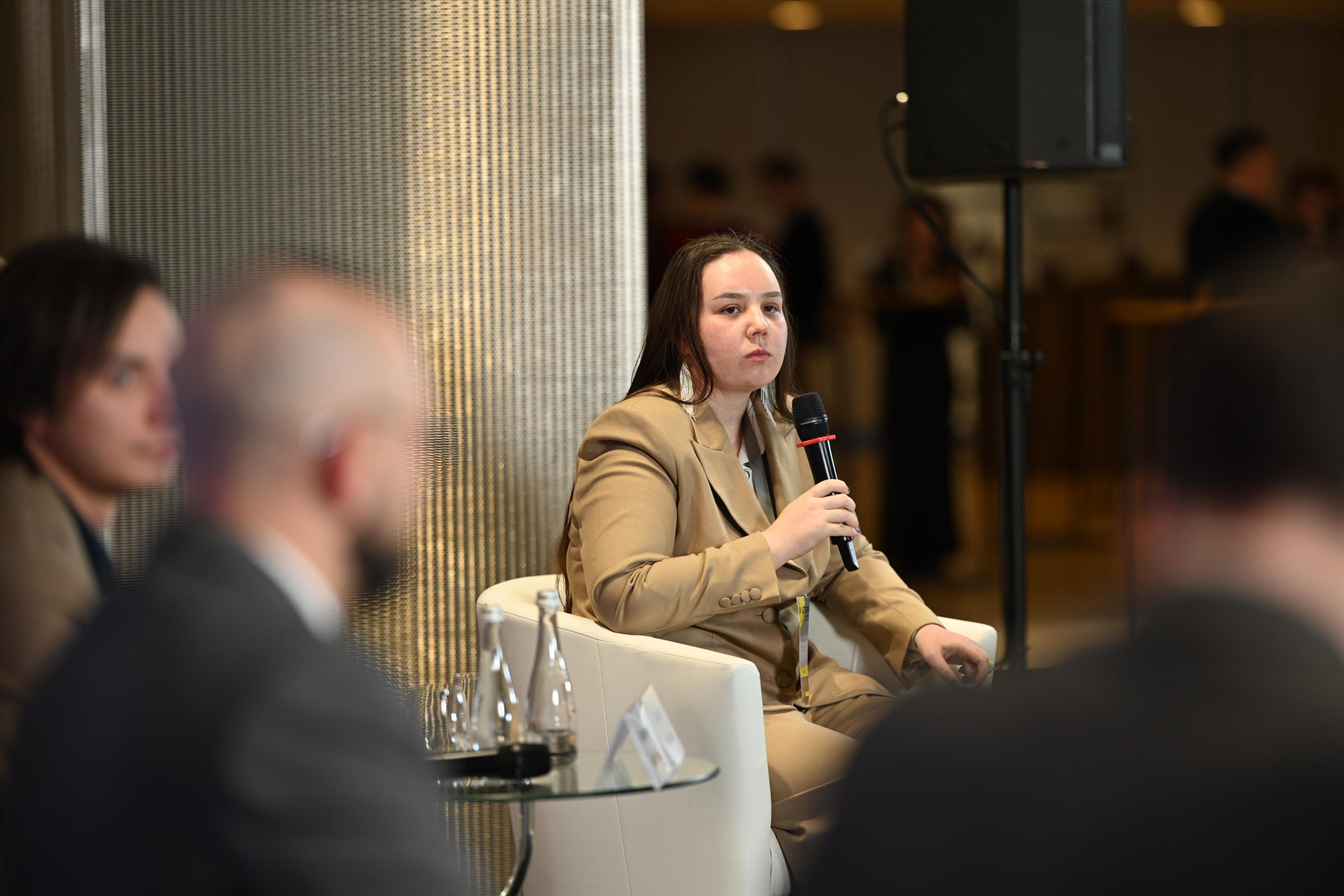
Natalia Rybnikova
The discussion was concluded by craftswoman Natalia Rybnikova, a participant in the Veteran’s Wife project, who shared her own practical experience of working with intellectual property:
“My creative journey began at the age of 13, when I started making beaded jewelry. In 2023, I officially registered as an individual entrepreneur and now work on seven platforms, including the international Etsy, while also developing my own website.
Over time, I developed many original designs and patterns, as well as individual orders created specifically for specific looks. That was when I realized that my work needed systematic protection through intellectual property tools.
Grant programs have greatly supported my development. After completing my studies, I officially registered my business and began applying for grants. It didn’t always work out the first time, but in two years I have already received four grants — for equipment, for the development of visual materials, and recently for training from the Ministry of Economy. Owing to this, I was able to create my own logo, an offline stand on Andriyivskyi Uzviz, and scale my business.
For a small business, intellectual property is not about formalities. It is about preserving uniqueness, protecting your work, and being confident that your creativity belongs to you.”
You can watch the broadcast of IP LET Forum 2025 on the IP Office YouTube channel:
For reference:
IP LET Forum 2025 is a space where intellectual property is viewed as a resource for economic recovery, innovation, and cultural resilience in Ukraine. The event demonstrates that Ukraine is an active player on the global IP map and a bearer of unique practices in the fields of innovation, culture, and technology.
The forum is organized by UANIPIO under the auspices of the Ministry of Economy, Environment and Agriculture of Ukraine in cooperation with the European Union Intellectual Property Office (EUIPO) and the EU-funded EU4IP project “Strengthening Intellectual Property Rights in Moldova and Ukraine.” The event is supported by the World Intellectual Property Organization (WIPO) and the European Patent Office (EPO).
Read other news from IP LET Forum 2025:
Ukraine on the global IP map: results of the first session of IP LET Forum 2025 – key ideas (video)
IP LET Forum 2025: presentation on new business opportunities in the IP field
IP LET Forum 2025: Technologies of the future and IP (session summary, video)

No Comments