



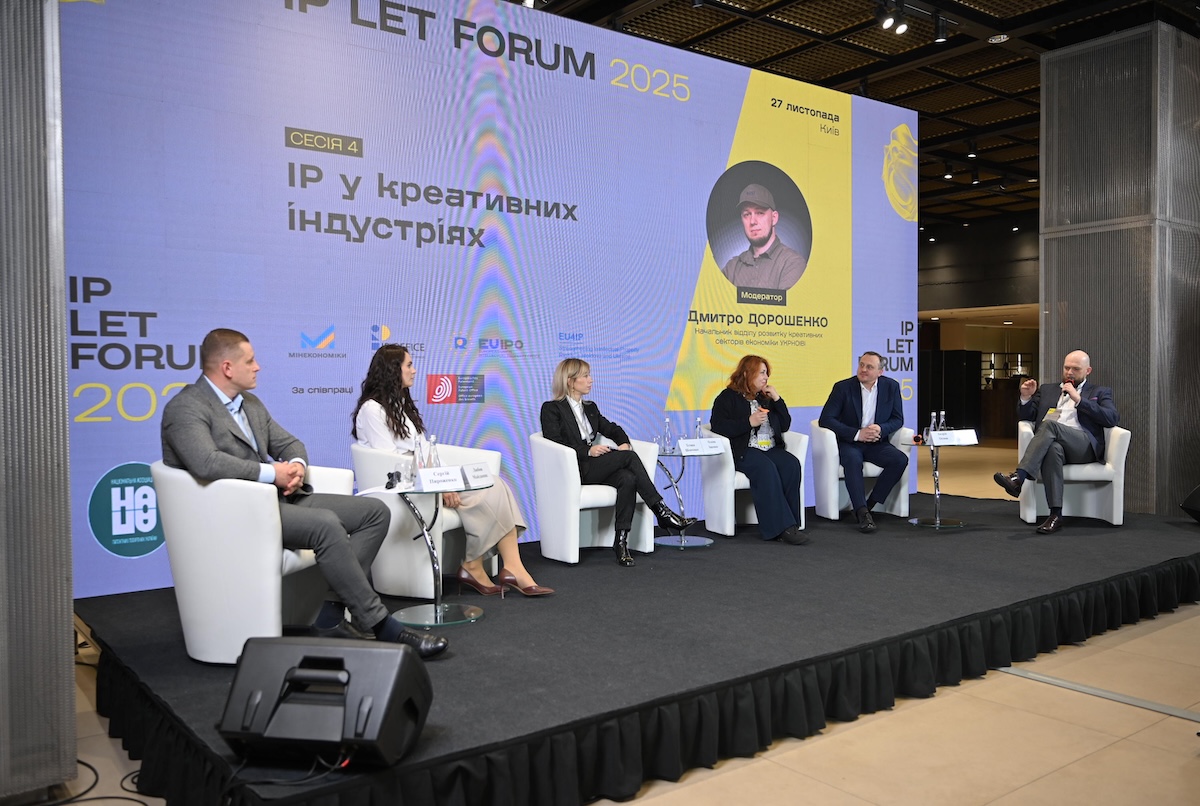
Challenges and the current state of intellectual property rights protection in cinema, theater and architecture were discussed at the session “IP in Creative Industries” as part of the IP LET Forum on November 27, 2025, in Kyiv.
The Ukrainian National Office for Intellectual Property and Innovations (UANIPIO/IP Office) actively cooperates with creative industries and has already seen the first results of this cooperation, said Dmytro Doroshenko, Head of the Unit for the Development Creative Sectors of the Economy at UANIPIO, who moderated the discussion:
“For three years, the IP Office has been trying to become an integral part of the creative industries, and in some cases it has succeeded. In fact, it took us only 8 months for the creative industries themselves to start addressing UANIPIO, because it’s known that the help can be gotten here.”
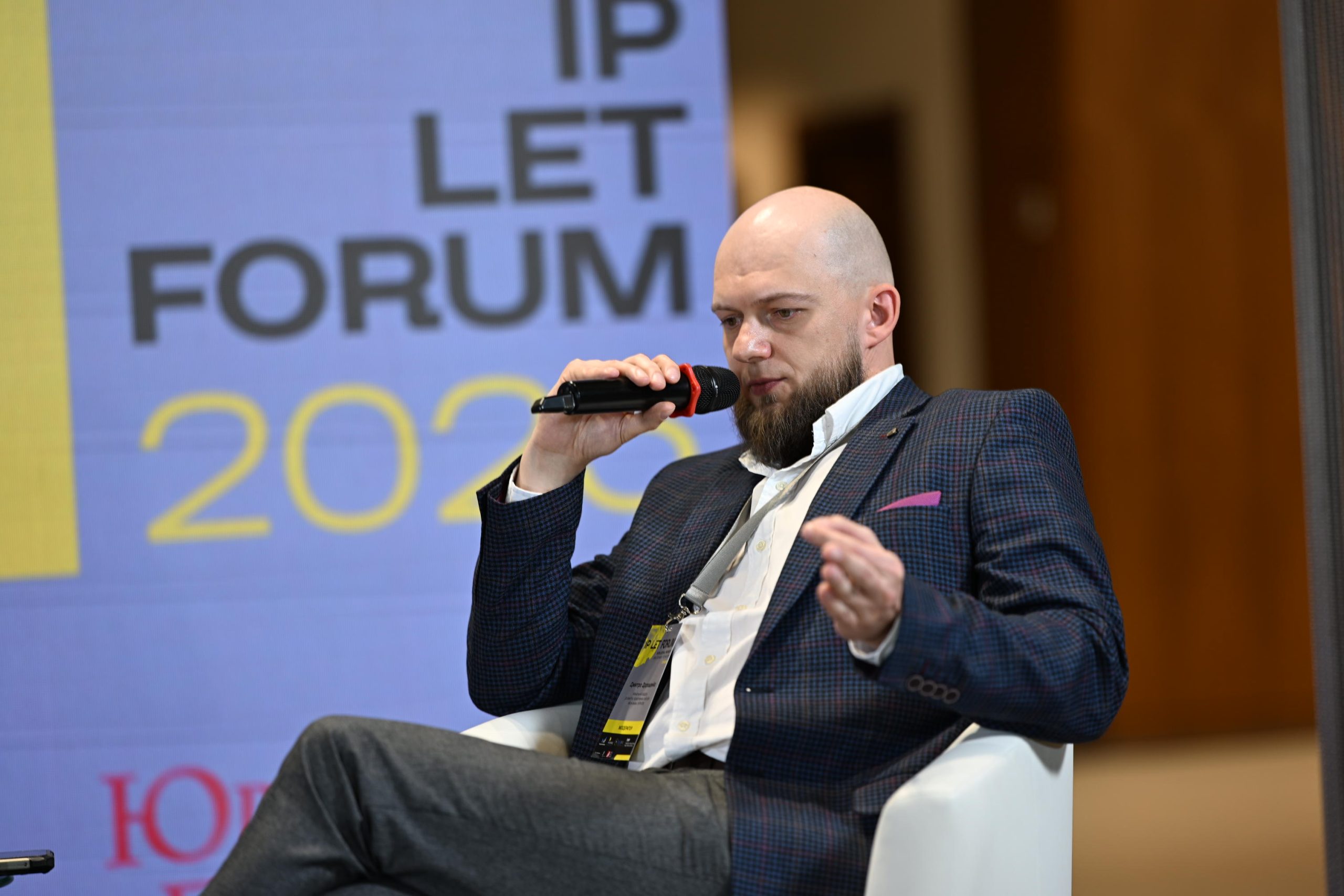
Dmytro Doroshenko
Liubov Maidanyk, Deputy Director of the IP Office, also noted an increase in awareness of one’s rights and their protection:
“We can already see growing awareness of intellectual property protection mechanisms among authors, creators, and designers – and that is a significant achievement. We are also focused on communication, which, in addition to dialogue, highlights the problems that exist in the creative industry and the solutions that are needed: tools for the protection and enforcement of copyright, trademarks, industrial designs, etc. After all, it is important not only to develop, but also to earn money. In other words, to fuel the economy and show our place on the world map.”
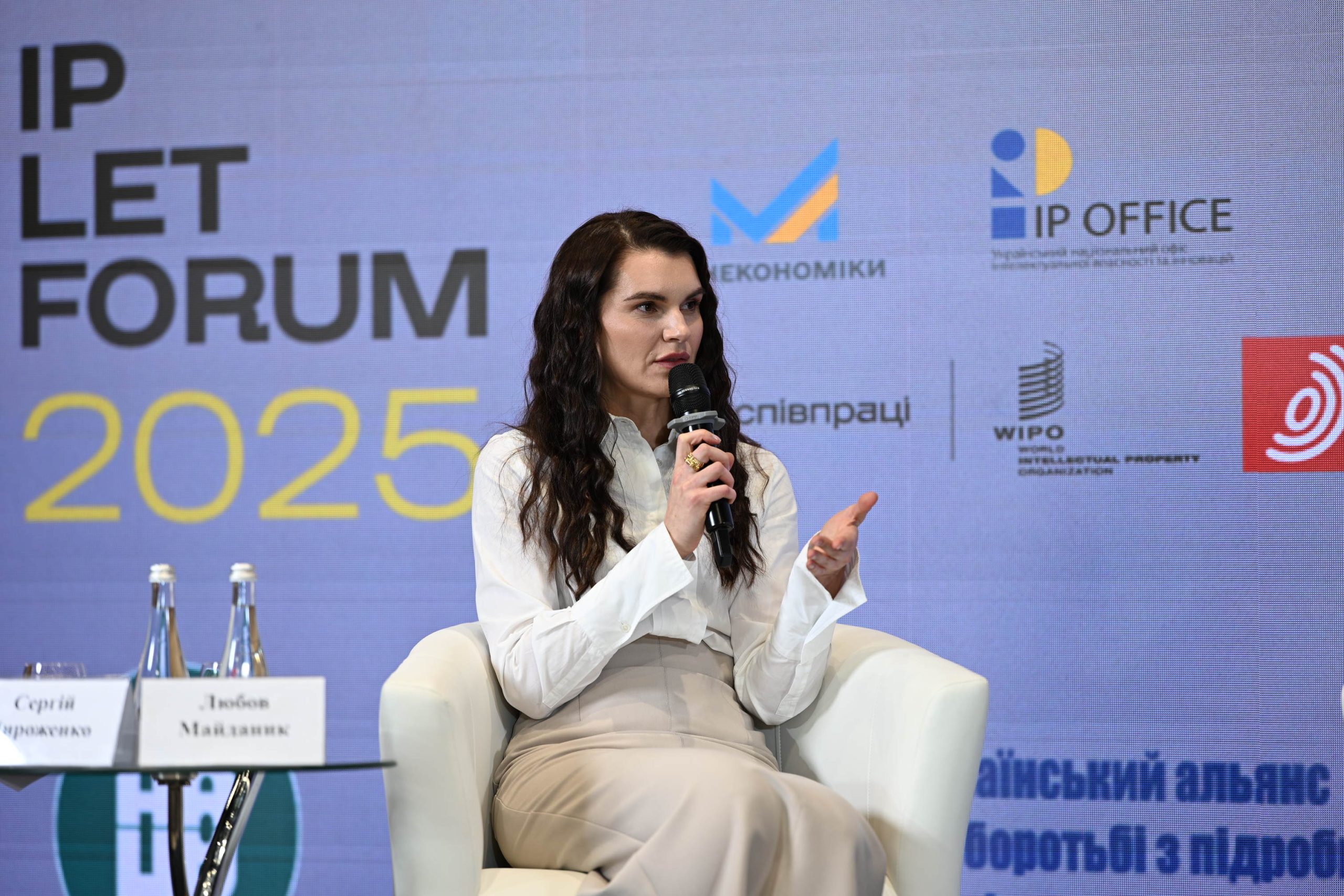
Liubov Maidanyk
Olena Ishchenko, Acting Director of the Ukrainian Center for Cultural Studies, spoke about the performance indicators of creative industries in 2023-2024:
“Despite the russian federation full-scale war of aggression, we see growth, adaptation, and the fact that creative industries cannot be destroyed. The KVED industry that paid the most taxes – is computer programming. But among other leaders there are: architecture, advertising agencies, specialized design, and individual artistic activities. We are seeing the growth in revenues in the creative industries, which continue to adapt, digitize, and find new forms of work.”
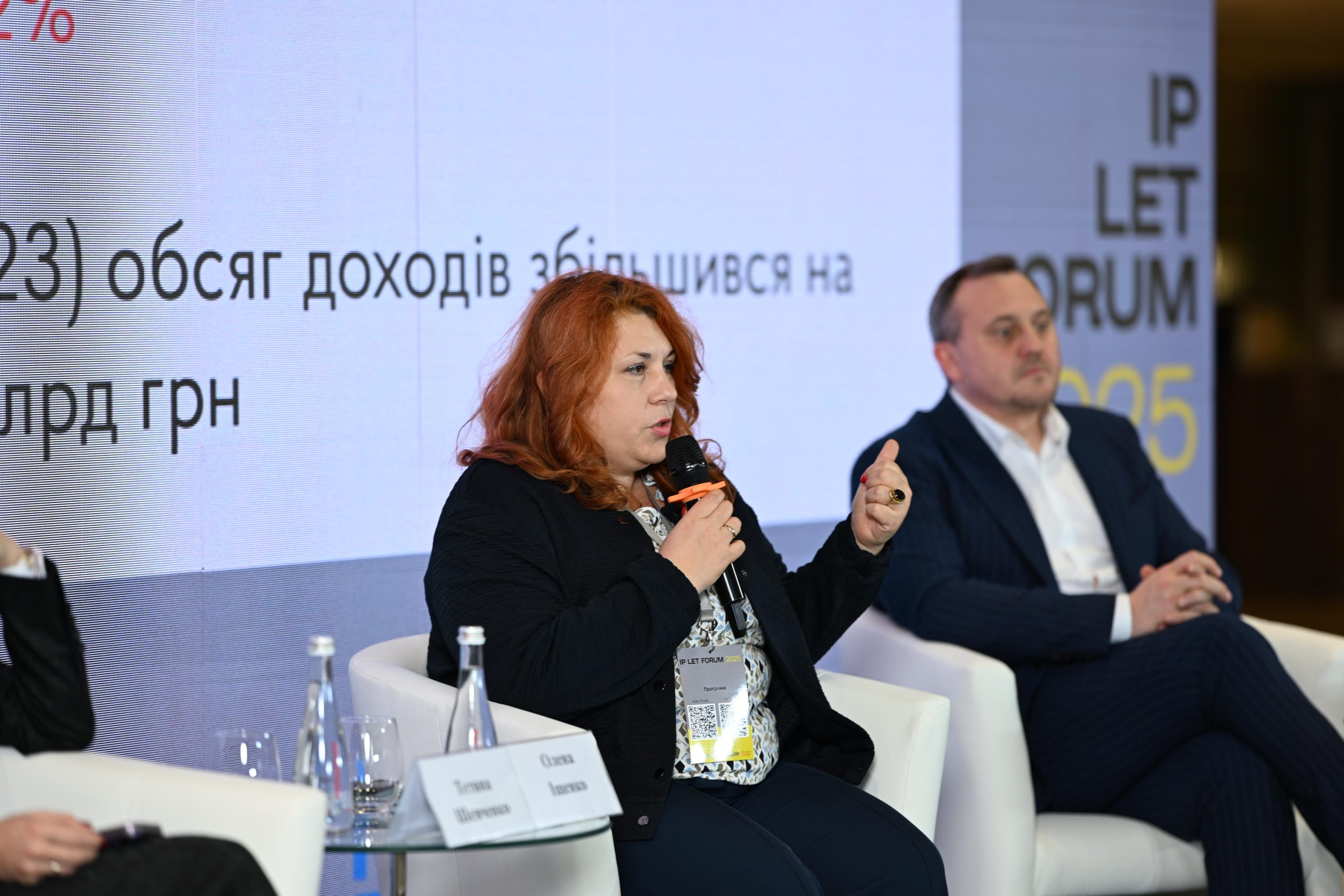
Olena Ishchenko
Hanna Bondar, People’s Deputy of Ukraine and Honored Architect of Ukraine, spoke about copyright and intellectual property in architectural practice:
“Copyright for architects is a mechanism for building reputation; without it, we will not be able to achieve the goals of post-war reconstruction in Ukraine. But we faced the problem that lawyers and architects look at architectural works from different angles, and establishing a dialogue was not easy. Another thing is that our copyright in architecture is not harmonized with the EU, the legislation is outdated and contradicts itself. So now we are actively working on changes.”
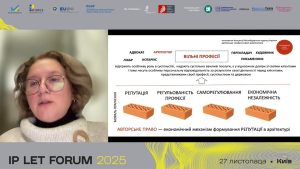
Hanna Bondar joined the session online
Andrii Osipov, Head of the Ukrainian State Film Agency, outlined the problems of intellectual property in film production:
“The Ukrainian strategy for managing copyright in the field of cinema was modeled on its French counterpart. In France, the State Film Agency uses revenue from copyright to create a fund that allows it to operate almost entirely without budgetary support. However, in Ukraine, this model has not yet proven to be as effective in practice and efforts should be focused on the correction of this situation.”
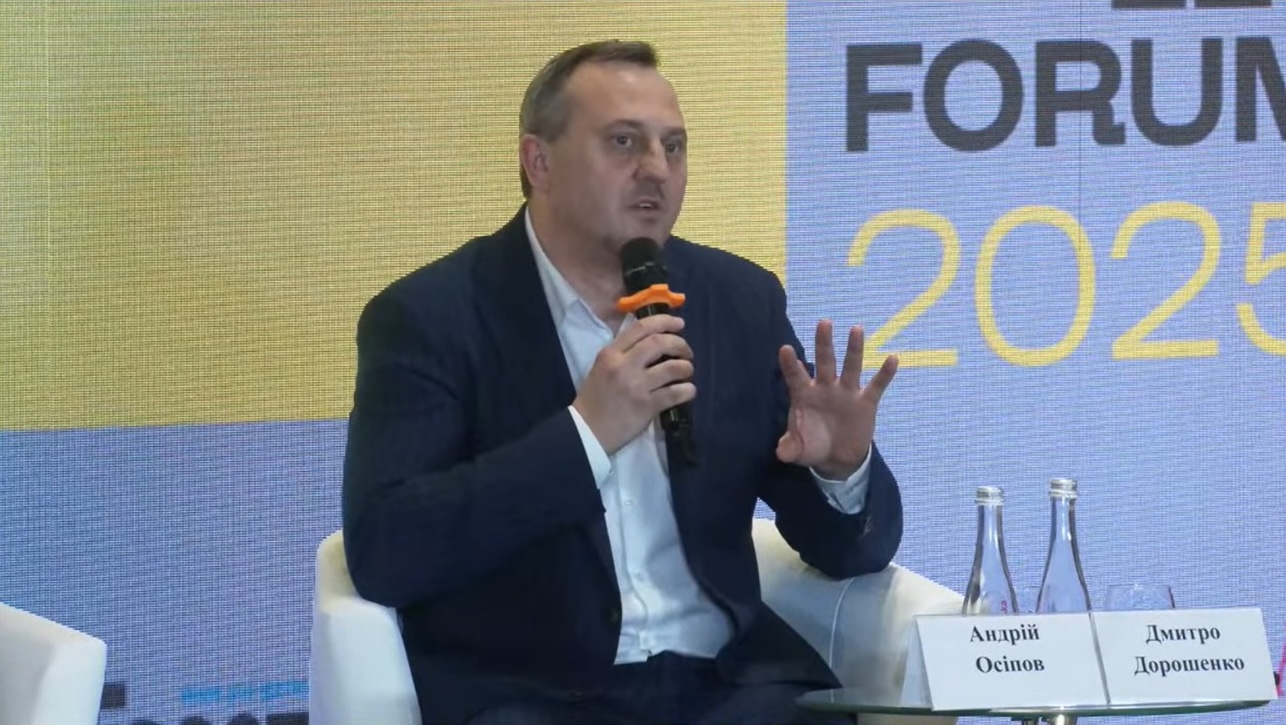
Andrii Osipov
Serhii Pyrozhenko, Lawyer and Head of the Legal Department at the Ivan Franko National Academic Drama Theater, outlined the problems of copyright compliance in theater arts:
“Ukrainian theater is truly experiencing a renaissance right now. There are several reasons for this: a reduction in concert programs due to the war, people want to find meaning and reflect in times like these. We are seeing a boom in Ukrainian classics, especially among young audiences. However, the Law on Theaters and Theater Business is no longer relevant and does not correspond to reality. It is equally important to raise awareness among theater workers about copyright, reward, etc. Currently, this is at an extremely low level.”
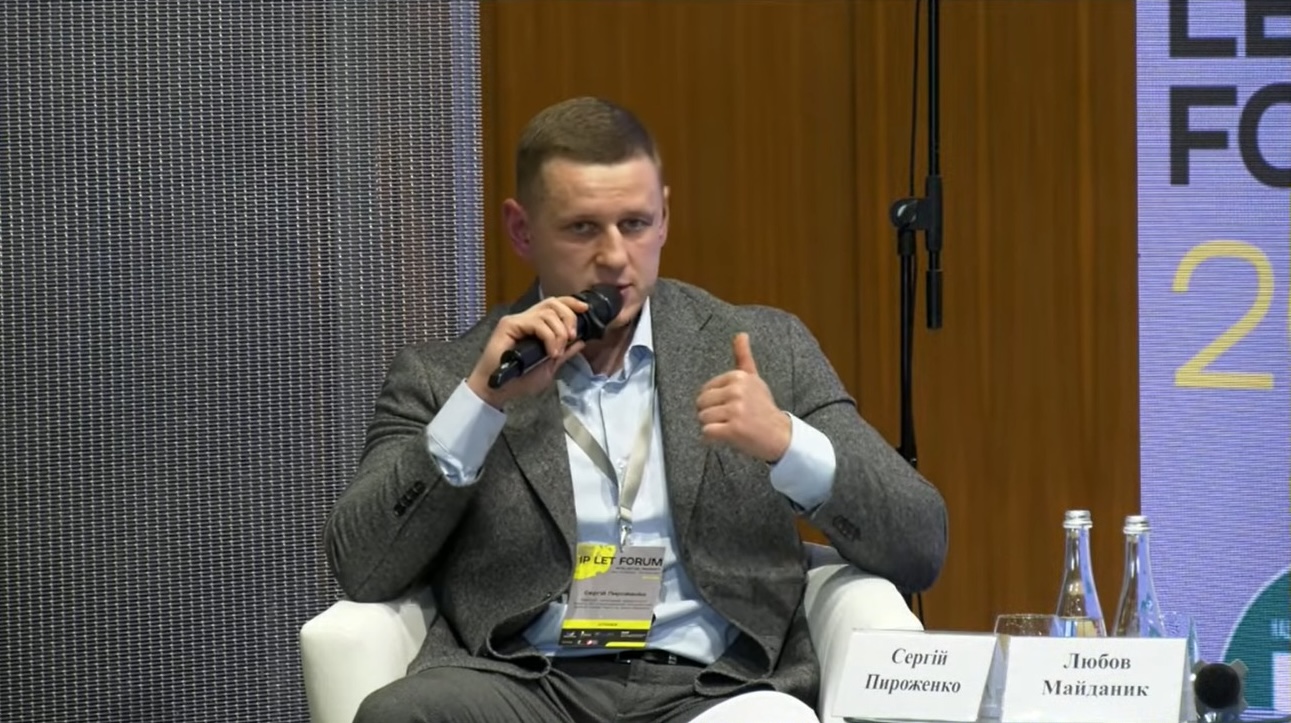
Serhii Pyrozhenko
Tetiana Shevchenko, First Deputy Head of the State Archival Service of Ukraine, spoke about balancing the documentation of war and copyright:
“Archives are now a place for creating meaning for new content that is needed at this time. An archive is essentially a new use of heritage for its reinterpretation. Before the russian federation full-scale war of aggression against Ukraine, archives were perceived as something closed and irrelevant, but now that has changed. Archivists have also changed, and are now actively documenting this war. And when we collect all the evidence, photos, and screenshots, we must respect copyright.”
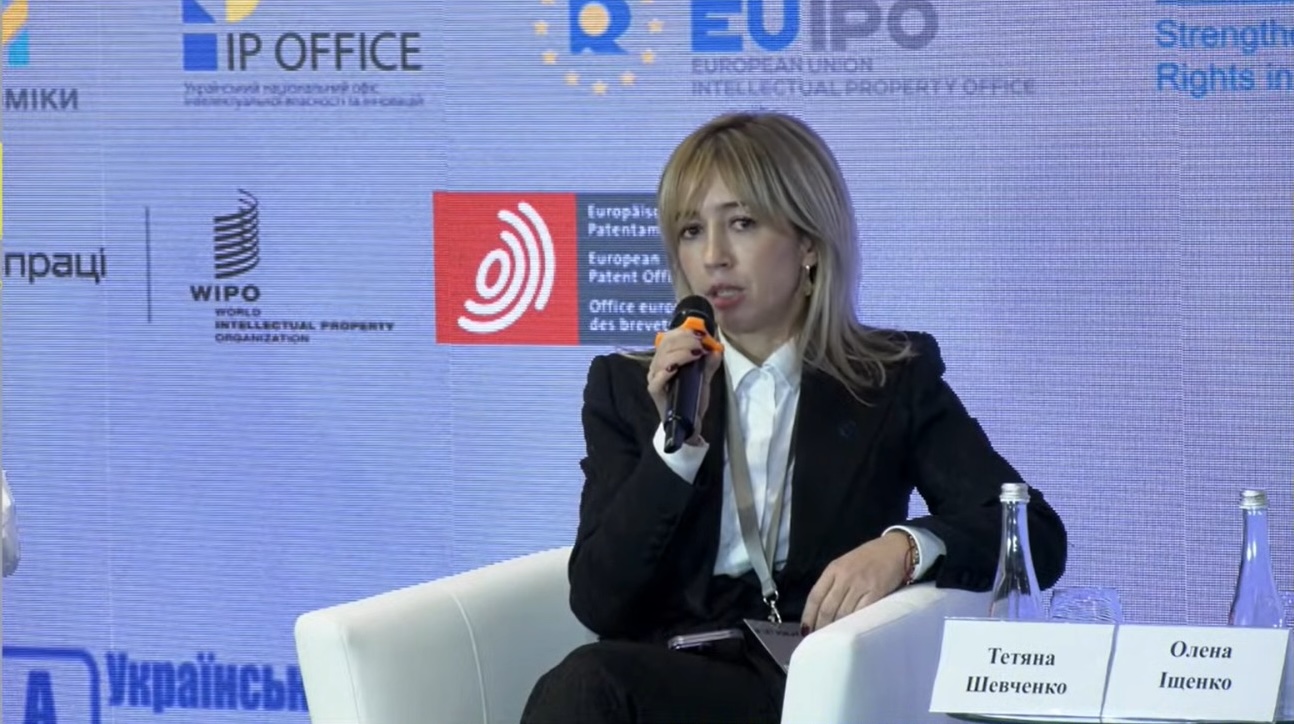
Tetiana Shevchenko
“Together with UANIPIO, we are creating a space where copyright and the preservation of archival documents are balanced. In today’s reality, documenting the war is crucially important,” concluded Tetiana Shevchenko.
You can watch the broadcast of IP LET Forum 2025 on the IP Office YouTube channel:
For reference:
The IP LET Forum 2025 is organized by UANIPIO under the auspices of the Ministry of Economy, Environment and Agriculture of Ukraine in cooperation with the European Union Intellectual Property Office (EUIPO) and the EU-funded EU4IP project “Strengthening Intellectual Property Rights in Moldova and Ukraine.” The event is supported by the World Intellectual Property Organization (WIPO) and the European Patent Office (EPO).
Read other news from IP LET Forum 2025:
Ukraine on the global IP map: results of the first session of IP LET Forum 2025 – key ideas (video)
IP LET Forum 2025: presentation on new business opportunities in the IP field
IP LET Forum 2025: Technologies of the future and IP (session summary, video)
Business, IP, and innovation: key insights from the IP LET Forum 2025 session (video)

No Comments