



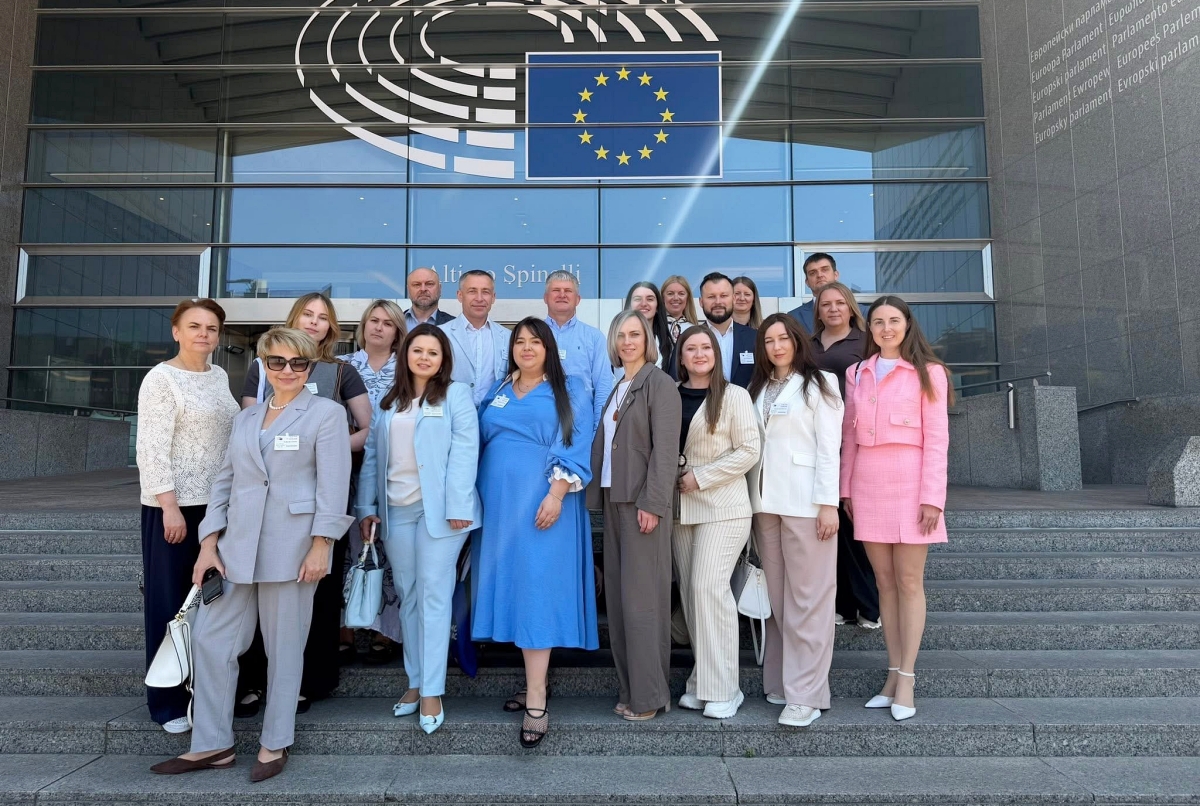
The opening of negotiations under Cluster 1, “Fundamentals of the EU Accession Process,” marked an important milestone on Ukraine’s path towards European Union membership and the practical implementation of European approaches in public administration. In this context, particular importance is attached not only to the harmonisation of national legislation with EU law, but also to a thorough understanding of the principles guiding the functioning of European institutions and the implementation of EU policies aimed at ensuring competitiveness, innovative development and regional cohesion.
This primarily concerns the implementation of the principles of partnership and multi-level governance, the involvement of regions and local communities in policy formulation and implementation, as well as the creation of conditions for sustainable innovation-driven development.
These issues were discussed during a study visit to Brussels attended by Olha Kronda, Head of the Innovation Development Department at the Ukrainian National Office for Intellectual Property and Innovations (UANIPIO), under the Polish development cooperation project “Supporting Entrepreneurship Development and the Competitiveness of Ukrainian Regions.”
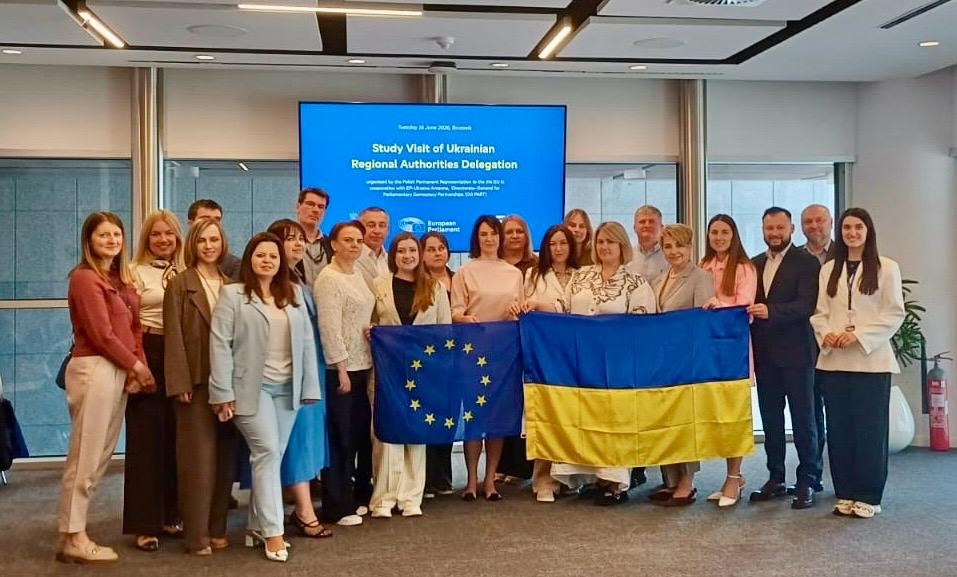
During the visit, working meetings were held at the European Parliament, the European Commission, the European Committee of the Regions and the Mission of Ukraine to the European Union, as well as with representatives of Ukrainian and European regional offices in Brussels.
During the meetings at the European Parliament, discussions focused on further support for Ukraine on its path towards EU membership and the importance of consistently fulfilling its commitments within the negotiation process. Particular attention was paid to the following issues:
At the European Commission, in particular during a meeting with representatives of the Directorate-General for Enlargement and Eastern Neighbourhood, the European Union’s current approaches to supporting Ukraine’s recovery, regional development and the involvement of local self-government bodies in European integration processes were presented. Participants discussed the role of regions in implementing reforms and using EU instruments to ensure the sustainable development of territories.
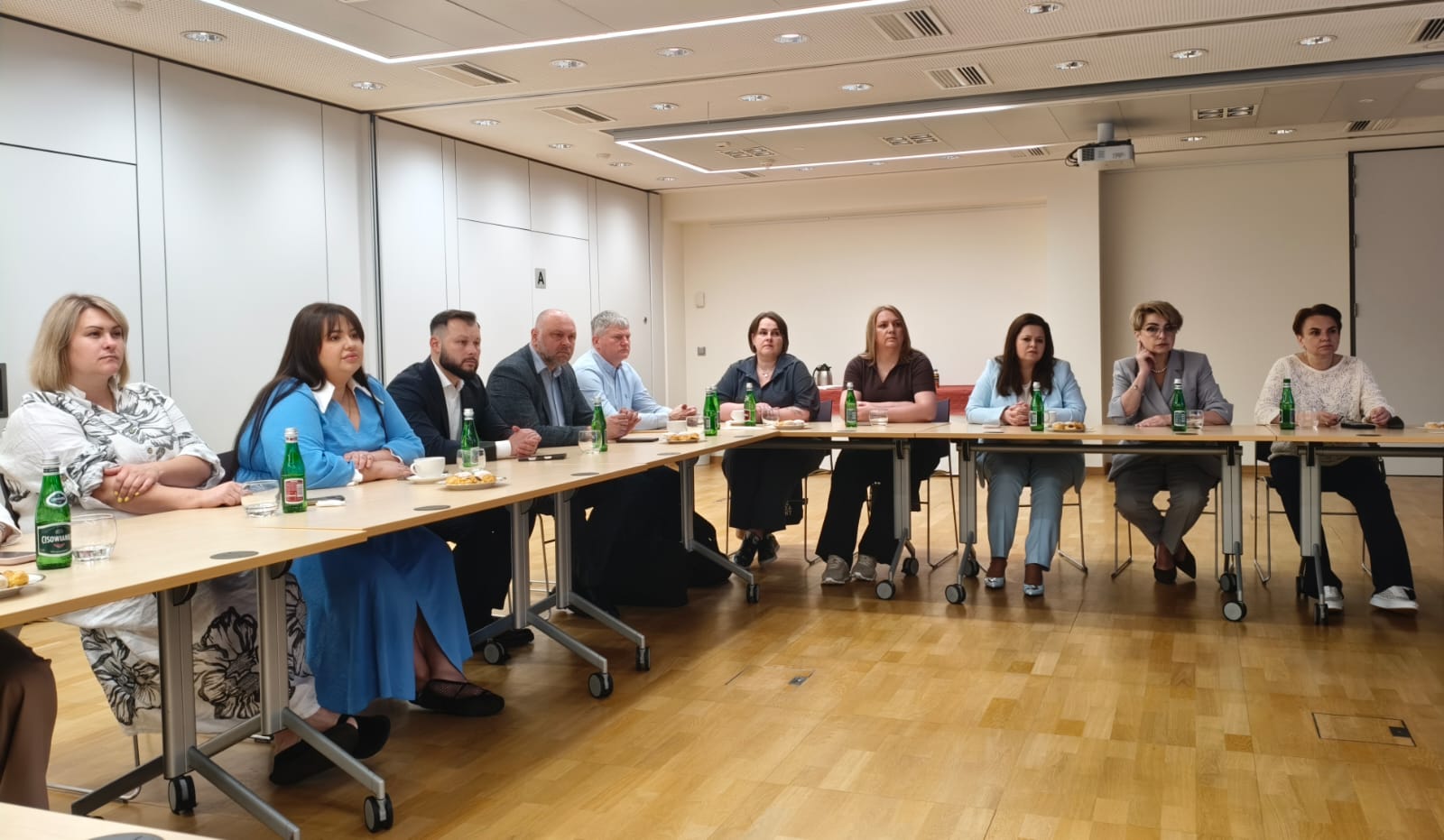
One of the key elements of the programme was an introduction to EU cohesion policy, which is one of the fundamental instruments of European integration. It is based on the principles of partnership, multi-level governance, the involvement of civil society, the active participation of regions and local communities in policymaking, as well as shared management and responsibility for achieving development outcomes. These approaches are currently regarded as important benchmarks for Ukraine’s further integration into the European space.
A meeting was also held with Oksana Diakun, Deputy Head of the Mission of Ukraine to the European Union. During the discussion, the key areas of activity of the Mission of Ukraine to the European Union were presented, in particular its role in coordinating Ukraine’s positions within the European integration and negotiation processes, as well as in ensuring interaction with the institutions of the European Union.
Particular attention was paid to the current state of the negotiation process on Ukraine’s accession to the EU, the logic of its further stages and the priorities defined in the context of the opening of Cluster 1, “Fundamentals of the Accession Process.” In addition, the importance of systematic work on implementing reforms and aligning national policies with the requirements of EU law was emphasised as a basis for gradual progress in the negotiation process.
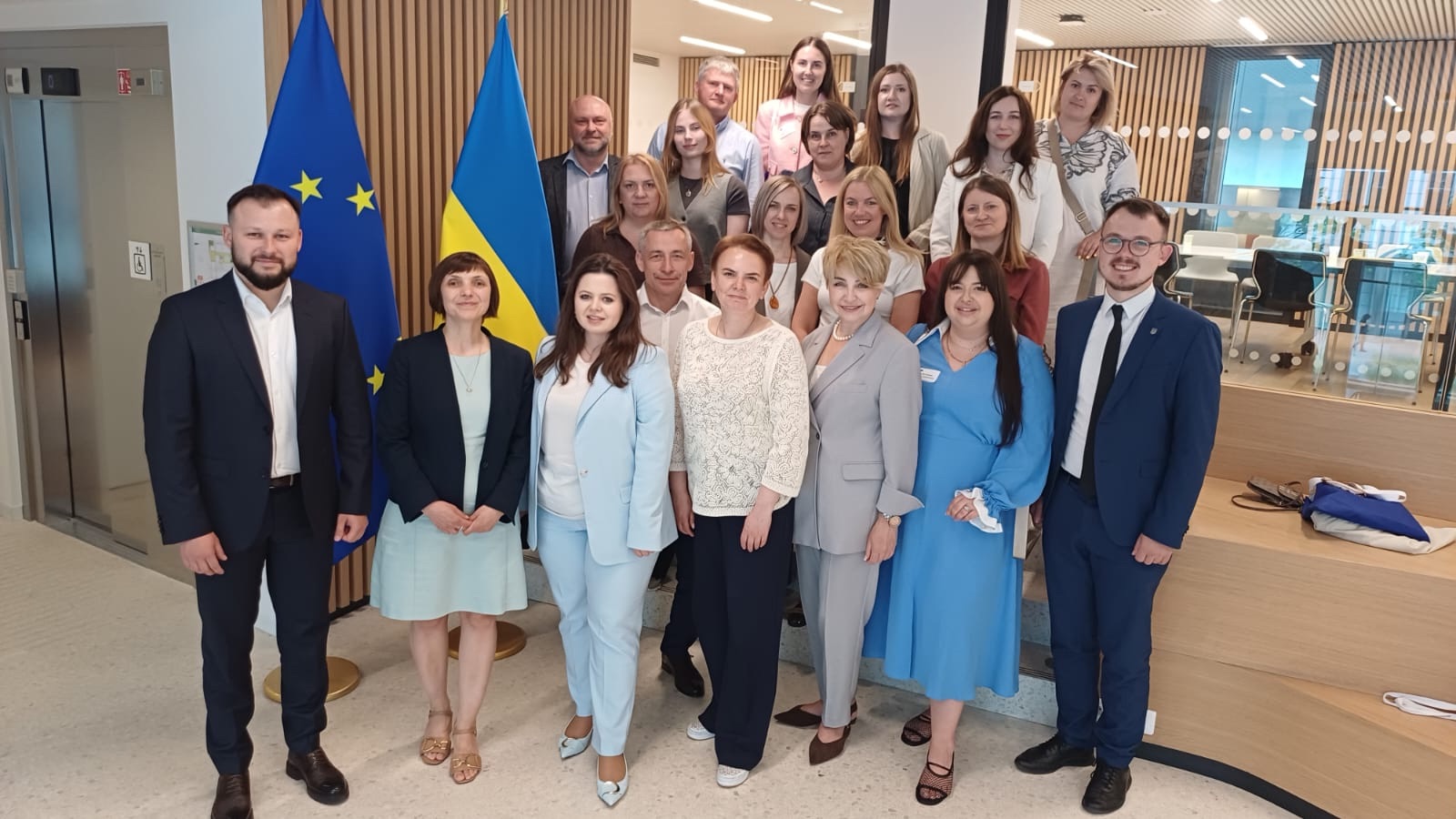
A separate element of the programme was a meeting at the European Committee of the Regions, as well as with representatives of the offices of Ukrainian regions and cities in Brussels. The European Committee of the Regions is a key body of EU multi-level governance, ensuring the participation of regions and local communities in the formulation and implementation of European policies, particularly in the areas of cohesion and regional development.
For Ukraine, developing cooperation with the European Committee of the Regions and strengthening the presence of Ukrainian regions in Brussels is of strategic importance, as it opens up access to European political and expert dialogue, partnerships with regions of EU Member States, and participation in European programmes. Another important priority is the development of a network of regional offices in Brussels as a practical tool for European integration, enabling regions to engage systematically with EU institutions and strengthen their capacity in the integration process.
Of particular interest to UANIPIO is the European experience in developing innovation ecosystems, supporting research and development, technology transfer, the commercialisation of intellectual property results, and engaging regions in innovation-driven development. Such instruments are important for building a knowledge-based economy and enhancing Ukraine’s competitiveness in the context of European integration.
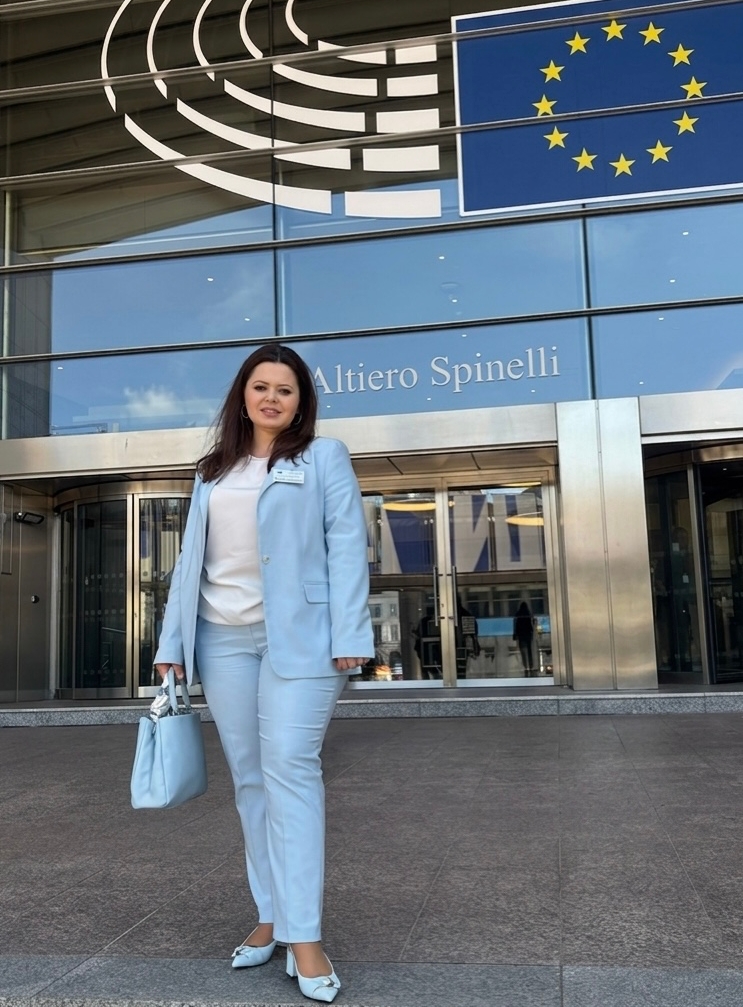
“Today, European integration means more than just aligning legislation with EU standards. Above all, it involves adopting modern approaches to governance, fostering innovation and establishing effective cooperation between the state, regions, the scientific community, business and civil society. During the meetings in Brussels, it was particularly valuable to see how the principles of partnership, multi-level governance and cohesion policy work in practice and support the development of EU regions and Member States. For Ukraine, this is not only experience worth taking into account, but also an important reference point in the process of implementing reforms, developing Ukraine’s innovation ecosystem and moving towards full membership of the European Union,” noted Olha Kronda.
Read also:
The Future of the European Innovation Ecosystem: Highlights from EIC Summit 2026
UANIPIO and the Supreme Court participated in the IP Case Law Conference 2026 at EUIPO

No Comments