



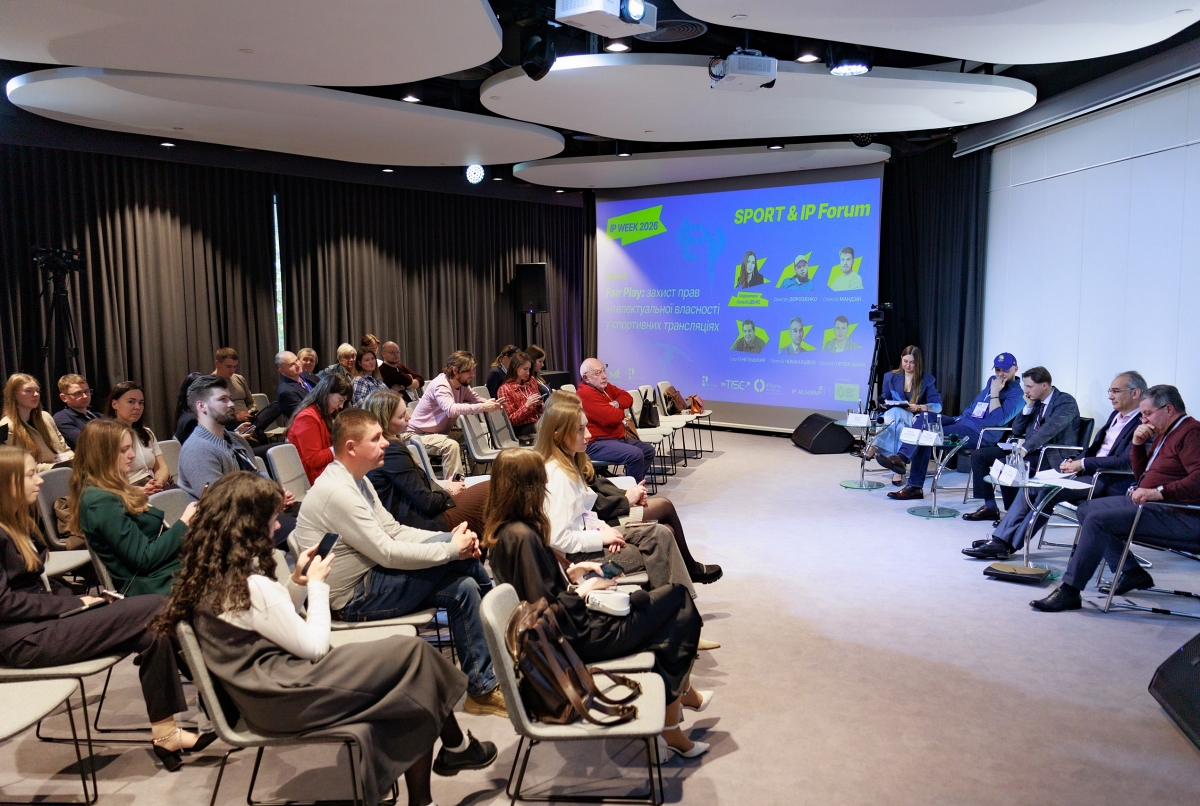
The specifics of protecting intellectual property rights during sports broadcasts, as well as methods and effective mechanisms for combating piracy, were discussed at the session “Fair Play: protection of intellectual property rights in sports broadcasts” during the SPORT & IP Forum as part of IP WEEK 2026.
The issue of protecting sports content in the digital environment warrants special attention, particularly given its role in the sports industry and the need for a rapid response to illegal use. This was emphasized by the discussion moderator, Nataliia Denis, Deputy Head of the Intellectual Property Rights Infringement Monitoring Center at the Ukrainian National Office for Intellectual Property and Innovations (UANIPIO/IP Office):
“Sports content is not only an element of the entertainment industry but also a significant economic asset that requires effective legal protection. At the same time, the digital environment creates new challenges: illegal broadcasts, streaming via unauthorized platforms and the difficulty of responding quickly to them.
The unique nature of sports broadcasts lies in the fact that the value of the content is closely tied to the time of its broadcast. As a result, existing response tools often prove insufficiently responsive, and the issue of coordination among rights holders, law enforcement agencies, digital platforms and other stakeholders takes on particular importance. This is precisely why it is important to discuss effective protection mechanisms and cooperation among all stakeholders.”
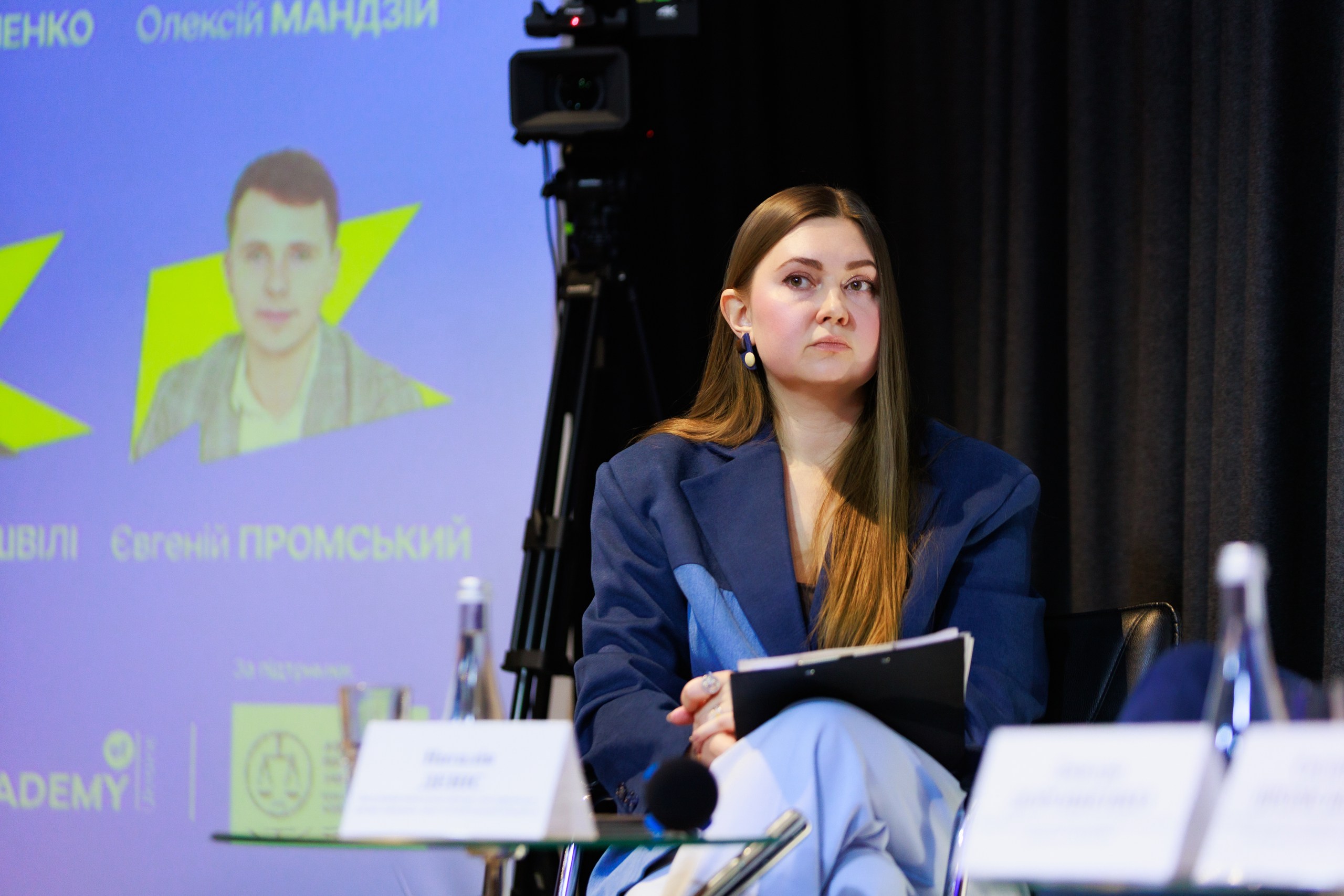
Nataliia Denis
Key topics of the session “Fair Play: protection of intellectual property rights in sports broadcasts”:
The recording of the SPORT & IP Forum is available on our YouTube channel:
Dmytro Doroshenko, Head of the Unit for the Development Creative Sectors of Economy at the IP Office, explained what exactly is subject to legal protection in the sports broadcasting sphere and how rights systems are structured:
“Unlike other media products, the value of a sports broadcast is very short-lived. This means that the rights holder generates the most revenue during those two hours of the match. And as soon as someone interferes with this broadcast (by illegally retransmitting it), the rights holder loses money. In this context, Ukraine is subject to particularly close scrutiny.”
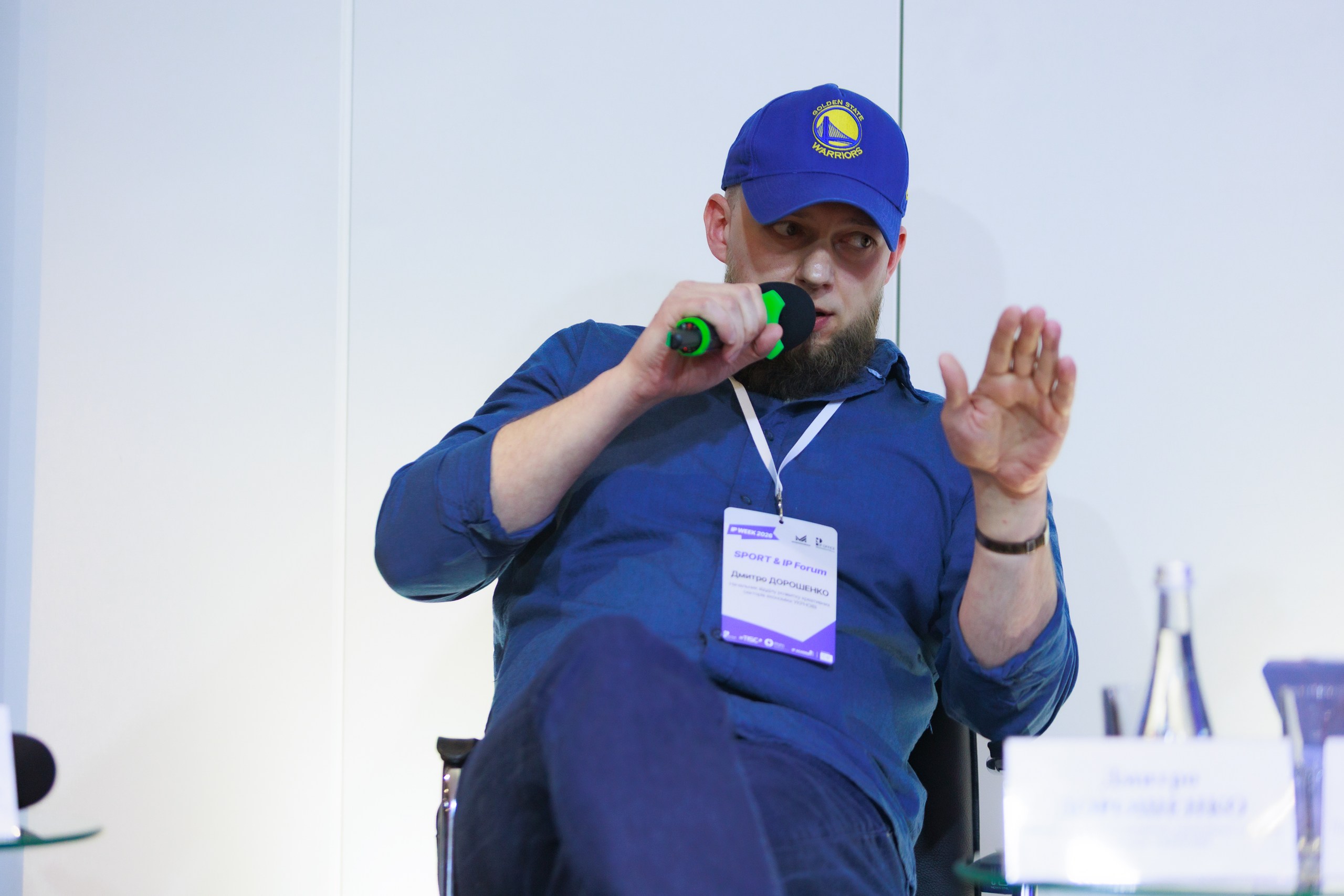
Dmytro Doroshenko
“Illegal retransmissions always involve new technologies and the laws of any country react very slowly to such technologies,” noted Dmytro Doroshenko. “Similarly, Ukrainian law (particularly regarding copyright and related rights) does not provide for rapid mechanisms to respond to such violations. In fact, the rights holder has only two hours to stop an illegal retransmission – and this is nearly impossible to do under current legislation. In some jurisdictions, however, this issue is resolved by a single court decision that allows sports leagues to implement dynamic blocking of pirated content.”
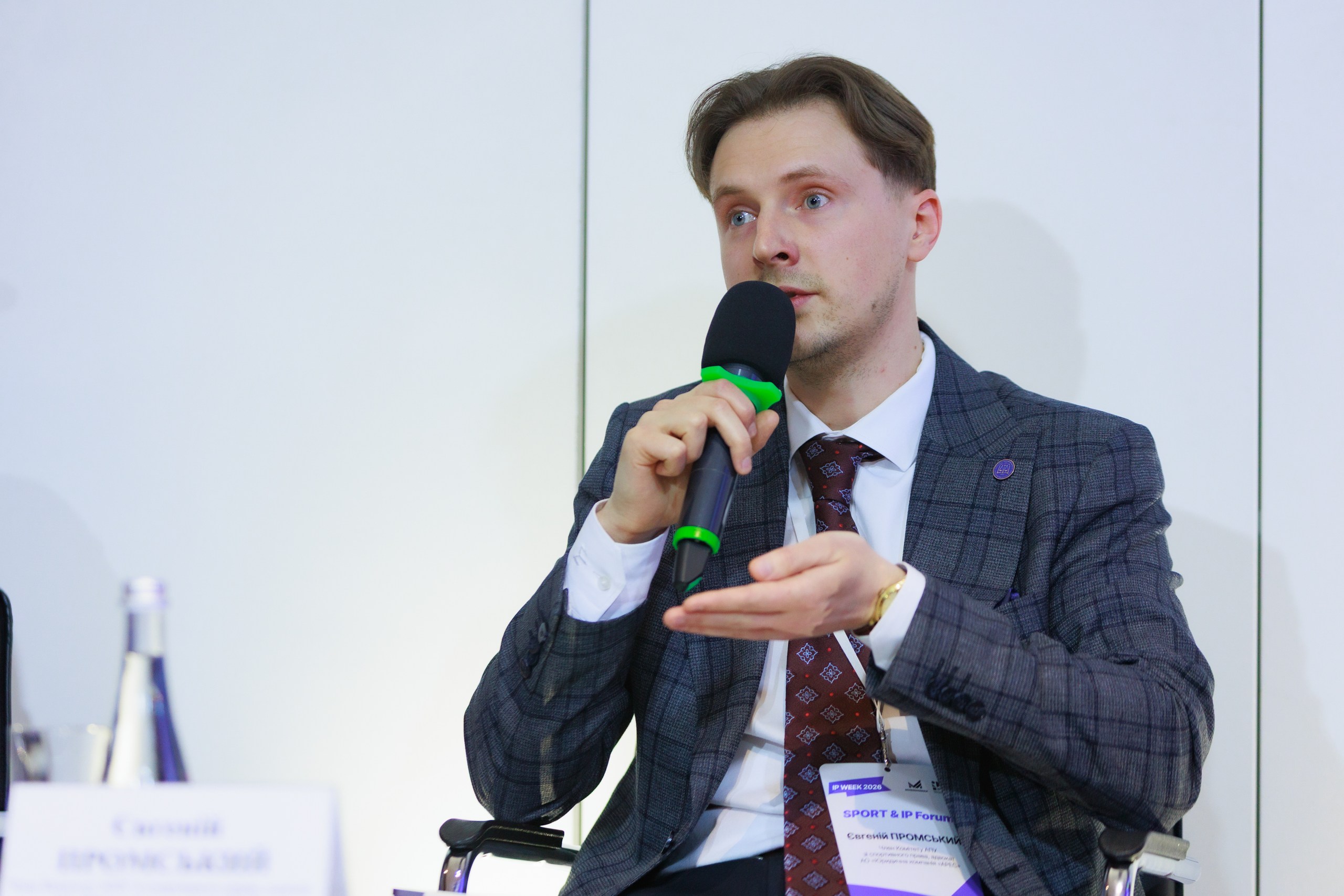
Yevhenii Promskyi
Yevhenii Promskyi, a member of the Ukrainian Bar Association’s Sports Law Committee, an attorney at the Law Firm “ARES,” explained who should be protected by copyright during sports broadcasts.
“Who owns the copyright to a sports broadcast? Until 2022, the actual rights holders in Ukraine were the organizers of competitions or games, however, a conflict arose in football, and some teams began broadcasting their own matches, prompting a rapid update to the legislation.
In 2022, provisions were added to the Law of Ukraine “On Physical Culture and Sports” according to which the rights to the broadcast are held directly by the sports club as the organizer of a specific match, rather than the competition as a whole. As a result, each club gained the ability to independently manage its rights and sell broadcast rights to various broadcasters.”
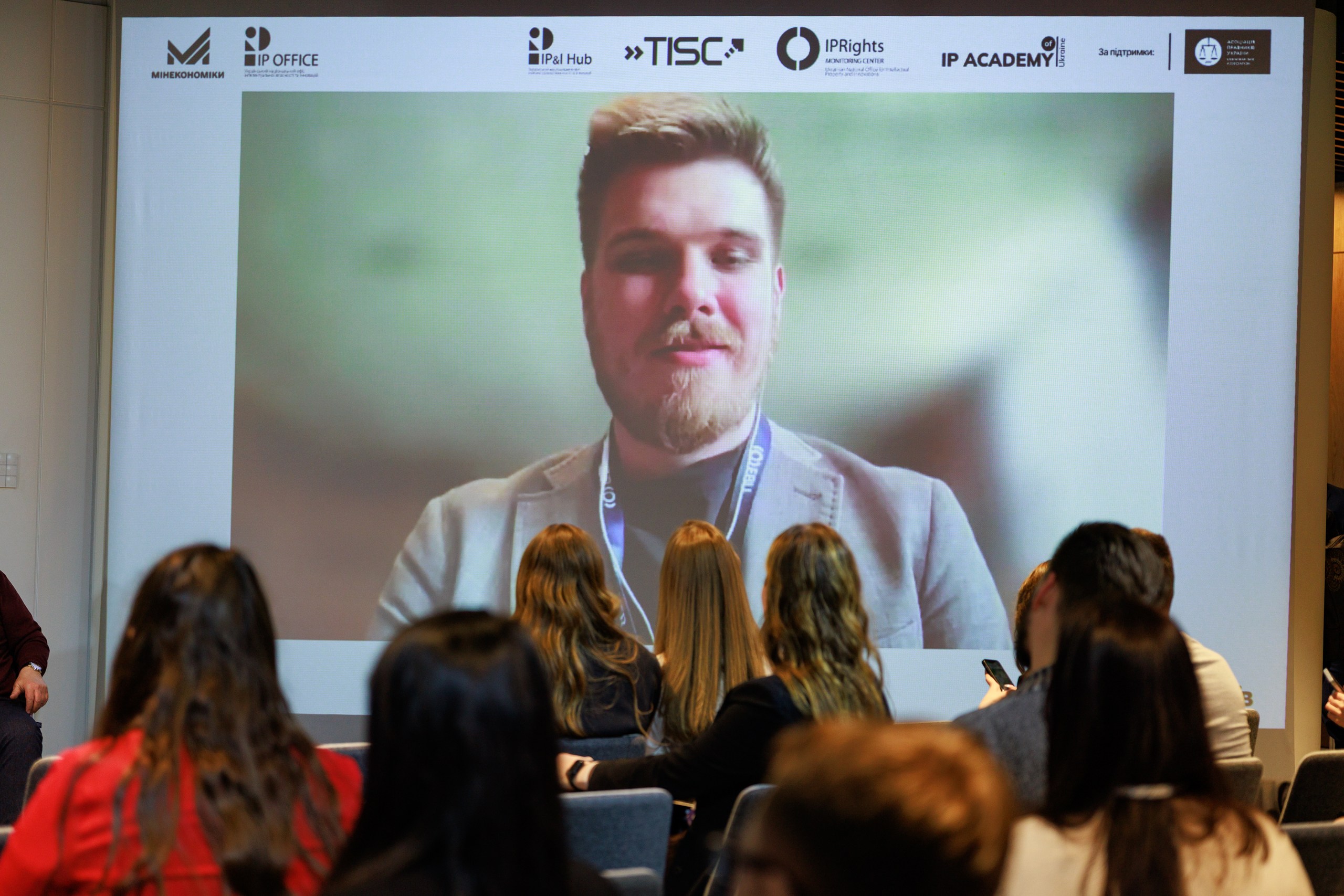
Oleksii Mandzii joined the discussion online
Oleksii Mandziy, Head of the Sports Division at Suspilne, described the practical work with sports content in the broadcasting sector:
“Sports content is one of the most expensive types of products. The amount of money that various broadcasters invest in purchasing sports content already exceeds $60 billion annually globally and this number will only continue to grow. In other words, the rights to sports broadcasts are becoming more expensive every year.
Using Suspilne as an example, I can talk about the international sports content we have purchased. The rights belong to international federations, which either sell them directly or through relevant sports agencies. We take into account the type of product and its distribution – where it can be shown (free-to-air TV, pay TV, digital, social media, news content only). After all, there are restrictions imposed by the federation itself.”
Heorhii Chomakhashvili, Director of Internet Copyright Management LLC, spoke about combating pirated broadcasts and shared his personal experience:
“We began fighting piracy a long time ago, around 2008-2009 and have been working with MEGOGO since around 2011. At first, it was movies and then sports programs. If you cannot find the sport you want to watch on pirate sites, it’s usually owing to us. This includes football championships, boxing matches and other sport events.
It’s important to note that there are very different approaches to protection: foreign rights holders have their own perspectives. There are two types:
Pirates are always coming up with new “tricks” to bypass bans and blocks. Social media platforms now pose significant competition to websites. There are nuances here – and they must be taken into account, because there is no universal method of protection.”
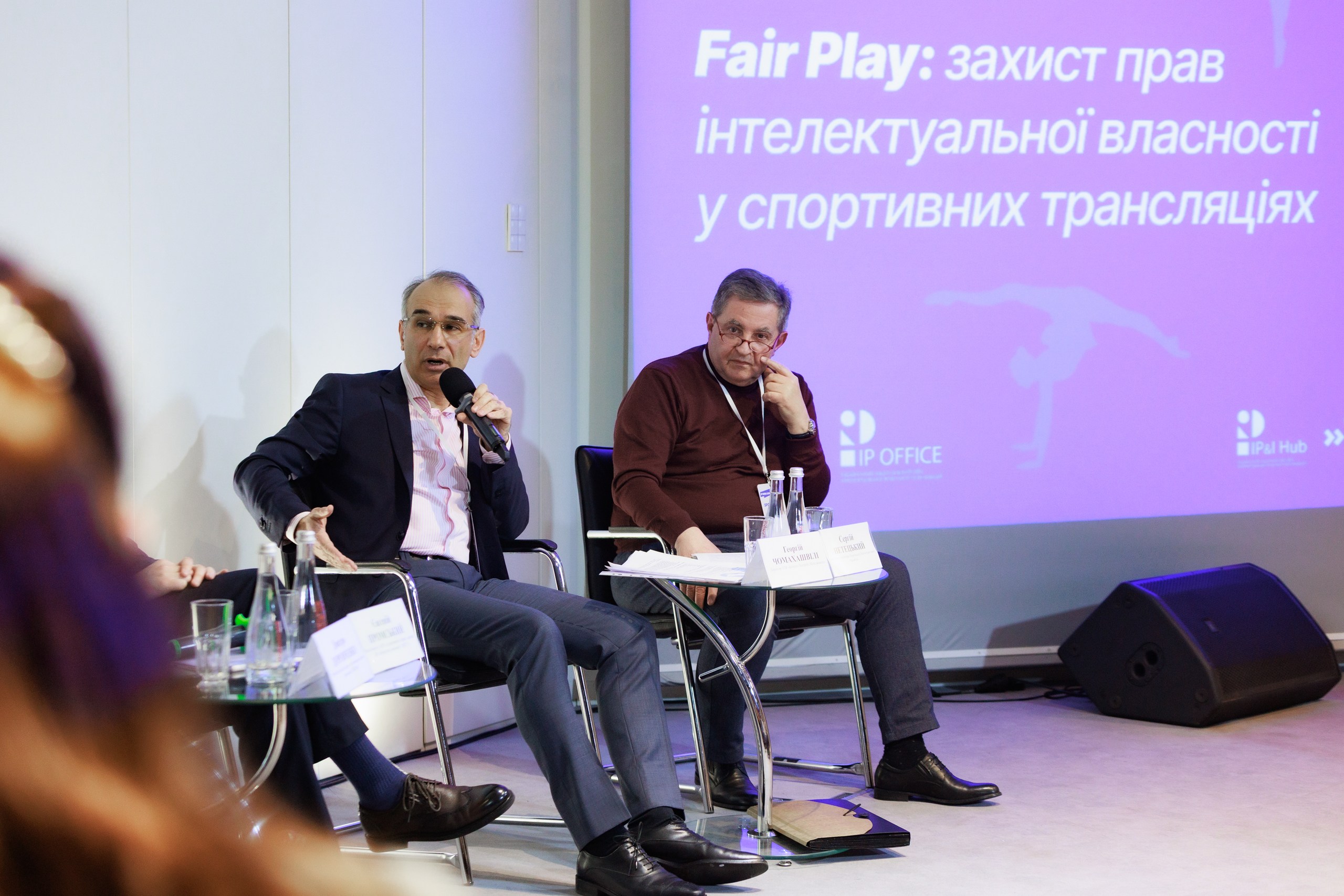
Heorhii Chomakhashvili and Serhii Netetskyi
Serhii Netetskyi, Deputy Director of the Ukrainian Anti-Piracy Assembly (UAPA), explained how to ensure coordination among all stakeholders in the combating against piracy:
“Ukrainian legislation does indeed react more slowly to new developments on pirate websites and to piracy in general. But it’s not all bad.
Based on our recent experience – we encountered two pirate sites that were streaming sporting events, specifically football matches, filed two complaints regarding copyright infringement – and we have already received a response.
On the one hand, Article 56 of the Law of Ukraine “On Copyright and Related Rights” works, but on the other hand, we face the reality that our demands as a representative of the rights holder are simply ignored by website owners and providers. Here, we need to coordinate our efforts and work on improving the legislation.”
Representatives from the Cybercrime Department of the National Police of Ukraine were also present at the event. Participants interested in further communication had the opportunity to discuss practical issues and continue their professional dialogue through networking.
The SPORT & IP Forum brought together representatives of government institutions and the sports industry, as well as innovators, lawyers and athletes.
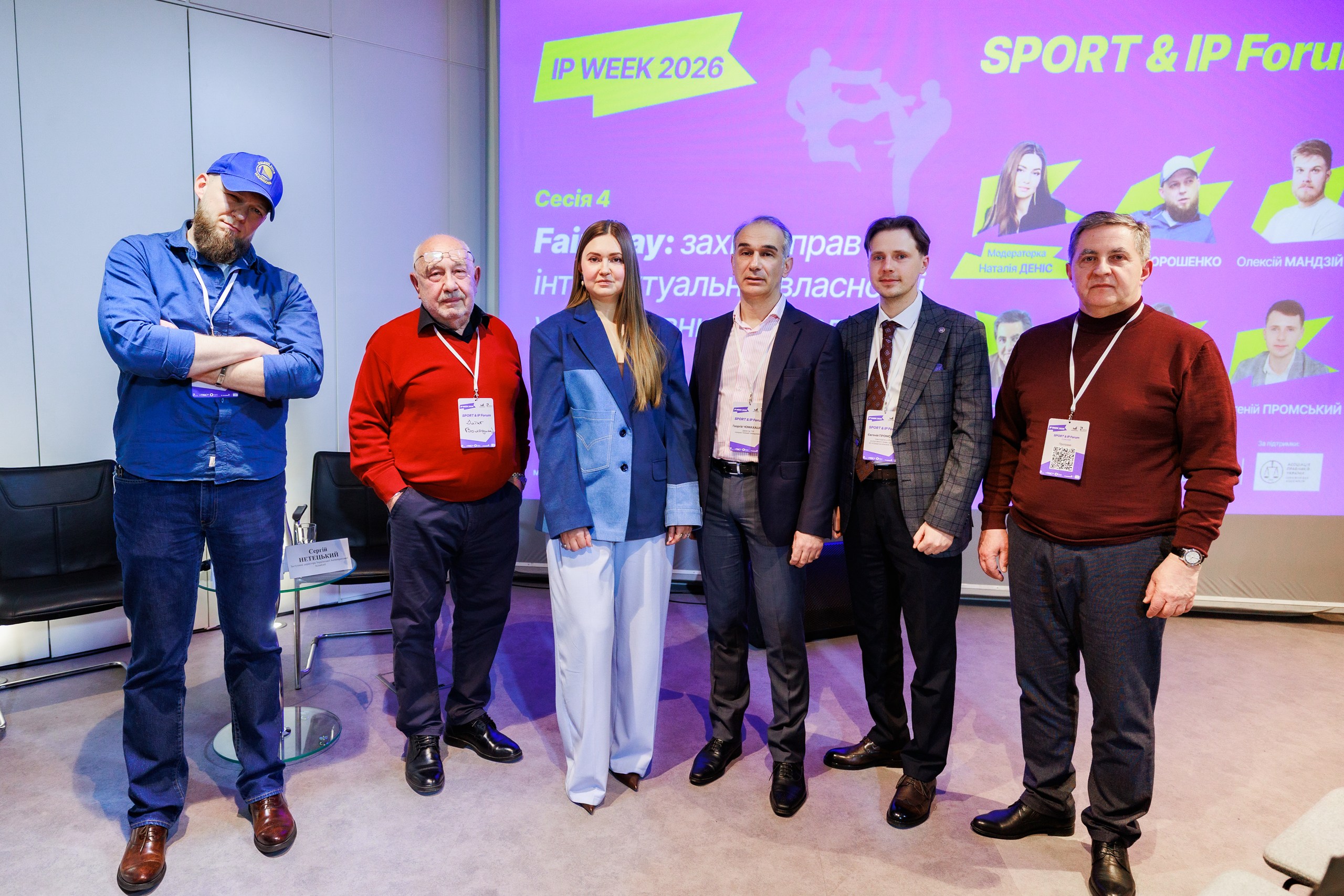
Session participants
“Intellectual property in sports is a valuable economic asset. Technologies, particularly artificial intelligence and data analytics, are significantly transforming the industry. Effective protection in the digital environment requires new, rapid and coordinated approaches. Our discussion today has once again confirmed that in the sports broadcasting sphere, the decisive factors are the speed of response, technological tools and effective cooperation between rights holders, platforms and government agencies,” Nataliia Denis concluded the forum.
Photo: Yurii Bielakh
Read more news from the SPORT & IP Forum:

No Comments